Did you know that federal law protects your right to provide your own casket, even if you don't buy it directly from a funeral home? When you are grieving, the process of choosing a casket in Colorado can feel like a heavy burden. It's common to worry about overspending or feeling confused by technical terms while you are simply trying to say a respectful goodbye. You want a resting place that reflects your loved one's unique legacy, but the pressure of making the "right" choice can be exhausting.
Our goal is to help you find a path forward that feels both honorable and manageable. You'll learn how to navigate various casket materials, local Colorado burial requirements, and personalization options to honor your loved one with the dignity they deserve. This guide explains the differences between metal and wood, clarifies your legal rights under the FTC Funeral Rule, and provides a clear framework for making a decision that fits your family's needs.
Understanding Casket Basics: Caskets vs. Coffins in Colorado
When you begin the process of honoring a loved one, you'll likely hear the terms "casket" and "coffin" used frequently. While many people use these words interchangeably, they actually describe two distinct styles of burial vessels. In the United States, and specifically when choosing a casket in Colorado, you'll find that caskets are the standard choice for most families.
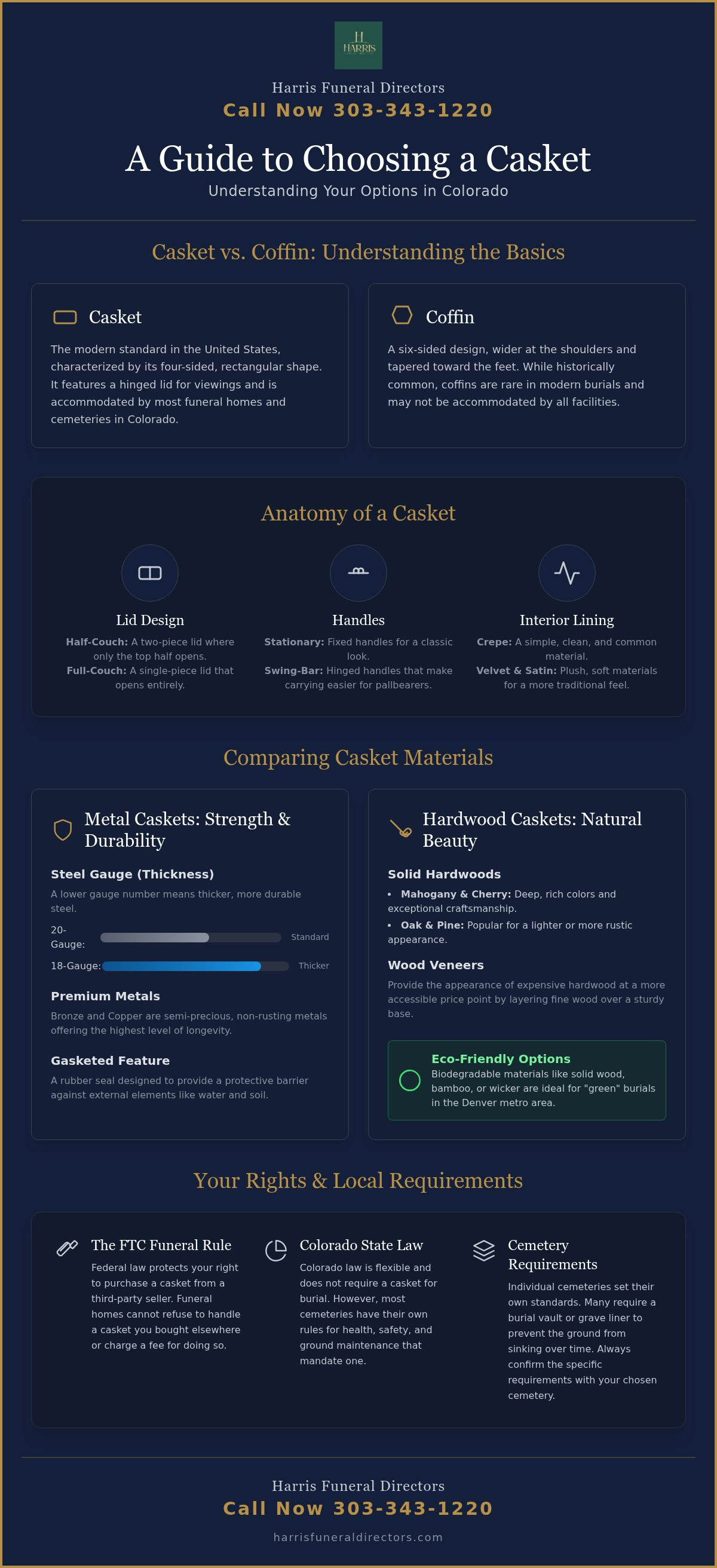
A casket is characterized by its rectangular, four-sided design. It's built with a hinged lid that allows for a viewing or open-casket ceremony. In contrast, a coffin features a six-sided, tapered shape that is wider at the shoulders and narrower at the feet. While you can learn more about the historical differences between Caskets vs. Coffins, the tapered coffin is quite rare in modern Colorado burials. Most local cemeteries and funeral homes are designed to accommodate the standard rectangular casket, which has become the centerpiece of Traditional Burial Services in Aurora.
Anatomy of a Casket
Understanding how a casket is constructed can help you make a choice that feels right for your service. One of the most important features is the lid design. A "half-couch" casket has a lid split into two pieces, so only the top half is opened for a viewing. This is often preferred because it provides a more intimate feel during the visitation. A "full-couch" lid is a single piece that opens entirely, showing the full length of the interior.
The hardware and handles also serve both functional and aesthetic purposes. Stationary handles are fixed in place, while swing-bar handles move outward, making it much easier for pallbearers to carry the casket safely and comfortably. Inside, the lining provides a soft, dignified resting place. You can choose from materials like crepe, which offers a clean and simple look, or velvet and satin for a more plush, traditional feel.
The Purpose of the Casket
A casket is a protective vessel designed for the dignified transport and burial of a deceased loved one. Beyond this practical function, it serves a deep emotional purpose. During a memorial or funeral service, the casket acts as a focal point for grief and remembrance. It provides a physical space where family and friends can gather to say their final goodbyes. Whether you prioritize the durability of the materials or the beauty of the interior, choosing a casket in Colorado is a way to create a lasting tribute that reflects the unique life and personality of the person you've lost.
Comparing Casket Materials: Durability, Aesthetics, and Value
Selecting a material is one of the most personal steps in choosing a casket in Colorado. It's about finding a balance between what looks right and what fits your family's budget. You aren't just buying a product; you're selecting a vessel that honors a life lived. Whether you're drawn to the strength of metal or the warmth of natural wood, each choice offers a different way to express your love and respect.
Metal Caskets: Strength and Finish
Metal caskets are often chosen for their durability and modern appearance. When you look at steel options, you'll see "gauge" mentioned frequently. This refers to the thickness of the metal. A 20-gauge steel casket is the standard, economical choice. If you want something sturdier, an 18-gauge casket is thicker and heavier. For those seeking the highest level of longevity, bronze and copper are excellent choices. These are considered semi-precious metals because they don't rust over time. You can find these in various finishes, from a soft brushed look to a high-polish shine that catches the light beautifully during a service.
Many families ask about "gasketed" caskets. These have a rubber seal designed to keep water and soil out of the casket. It's a common misconception that these seals stop the natural process of decomposition. In reality, they simply provide a protective barrier against external elements. Understanding your rights through The FTC's Funeral Rule ensures you can ask for clear explanations of these features without feeling pressured. You have the right to choose exactly what fits your needs.
Hardwood Caskets: Natural Beauty
If you prefer a sense of warmth and tradition, hardwood is a wonderful option. Every wood casket is unique because of the natural grain patterns in the timber. Solid wood options like mahogany and cherry offer a deep, rich color and exceptional craftsmanship. For a more rustic or lighter feel, oak and pine are popular selections. If budget is a primary concern, wood veneers provide the appearance of expensive hardwood at a more accessible price point. These are crafted by applying a thin layer of fine wood over a sturdy base.
Wood is also the material of choice for families interested in eco-friendly or "green" burials in the Denver metro area. Because wood is biodegradable, it's often permitted in natural burial grounds where metal is prohibited. You might also consider materials like bamboo or wicker for a truly minimal environmental impact. If you're feeling overwhelmed by these choices, reviewing our services overview can help you understand how each material fits into different types of ceremonies. We're here to help you find a selection that feels right for your family and your loved one's legacy.
Colorado Burial Laws and Cemetery Requirements You Need to Know
When you're grieving, the details of burial laws often feel like a heavy burden. It's helpful to know that Colorado law is actually quite flexible, though individual cemeteries often set their own standards to maintain their grounds. Understanding these rules early in the process makes choosing a casket in Colorado much simpler and prevents unexpected hurdles during the service arrangements. While state statutes are flexible, it's helpful to review the specifics of Colorado Burial Laws to understand your rights regarding body disposition and casket requirements.
Your Rights Under the Funeral Rule
The Federal Trade Commission's Funeral Rule is a powerful protection for your family. It ensures you have the right to purchase a casket from any source you choose, whether that's an online retailer or a local craftsman. A funeral home cannot refuse to use a casket you bought elsewhere, and they are legally prohibited from charging you a "handling fee" for doing so. To help you compare costs fairly, every provider must give you a General Price List (GPL) that shows individual costs. This transparency helps you avoid "package" deals that might include items you don't actually want or need.
Burial Vaults and Grave Liners
In many Aurora and Denver cemeteries, you'll find that an outer burial container is required. It's important to distinguish between the casket and the vault. The casket is the inner vessel that holds your loved one, while the vault is a sturdy outer container, usually made of concrete or metal, that the casket is placed into. Cemeteries require these because they prevent the ground from settling or collapsing under the weight of heavy maintenance equipment. While you are choosing a casket in Colorado, you should also ask your cemetery about their specific vault requirements. Some may allow a simple grave liner, while others require a reinforced, sealed vault.
Natural and Green Burial Options
If you're looking for a more environmentally conscious approach, several natural burial sites exist along the Front Range. These locations typically forbid the use of metal caskets or concrete vaults. Instead, they require biodegradable containers made of softwoods, wicker, or even simple fabric shrouds. Colorado regulations allow for these "green" burials, provided they meet the specific health and safety standards of the local municipality. If you choose this path, your focus will be on finding a vessel that returns naturally to the earth, honoring both your loved one and the Colorado landscape they called home.
A Step-by-Step Guide to Choosing the Right Casket for Your Loved One
Making a final selection is a methodical process that requires patience and care. It helps to break the decision down into manageable steps so you don't feel overwhelmed. Choosing a casket in Colorado doesn't have to be a source of stress if you follow a clear framework to ensure your choice respects both your emotional needs and your financial boundaries. By taking it one step at a time, you can find a vessel that truly honors the life of your loved one.
Step 1: Establishing a Realistic Budget
Your first step is to determine a total budget for the burial. This should include the cost of the cemetery plot, the opening and closing of the grave, and the Burial Service Fees charged by the funeral home. Casket prices vary widely based on material, with steel being a versatile mid-range option. Remember that dignity isn't defined by a price tag. A simple, well-chosen vessel is just as respectful as a more elaborate one, provided it fits within a plan that keeps your family's financial health intact.
Step 2: Identifying the Type of Service
The nature of the ceremony often dictates the type of casket you need. If you're planning an open-casket viewing or visitation, you may want to focus more on the softness of the interior lining and the functionality of the lid design. For a closed-casket graveside service, the exterior material and the durability of the finish might be your primary concern. Knowing this early helps narrow your options significantly.
Step 3: Selecting Your Material
Think about the legacy you want to leave. Does the natural warmth of oak feel right, or does the polished strength of stainless steel better reflect your loved one's character? This is a key part of choosing a casket in Colorado that feels authentic to the person you are honoring. Consider how the material will look during the service and how it meets any environmental preferences your family may have.
Step 4: Adding Personal Touches
Personalization is where you can truly reflect a unique life. Many modern caskets allow for custom corner art, such as veteran symbols, religious icons, or nature-themed designs. You can also choose embroidered head panels that feature meaningful quotes or imagery. Don't hesitate to include small personal items like letters, photos, or a favorite memento inside the casket. These touches turn a standard vessel into a deeply personal tribute that tells a story of a life well-lived.
Step 5: Verifying Cemetery Compatibility
Before you finalize your purchase, consult with your local Aurora funeral director. They will help you verify that your choice meets the specific requirements of your chosen cemetery, including vault compatibility and size regulations. If you need assistance with these steps right now, you can reach out to our team for immediate need support. We are here to walk alongside you through every detail of this journey.
Honoring a Legacy: Personalized Casket Services at Harris Funeral Directors
At Harris Funeral Directors, we believe the process of choosing a casket in Colorado is more than just a logistical task. It's a final act of devotion and a way to preserve the legacy of someone who meant the world to you. Our family-owned team is dedicated to providing high-quality, affordable options to the Aurora community. We think every family deserves a transparent experience where their emotional needs come first. You won't find high-pressure sales tactics here. Instead, you'll find a steady partner who respects your budget and your vision for a dignified farewell.
Veteran and Military Honors
For those who served our nation, we take great pride in offering specialized Veteran Funeral Services. Military honors often include specific casket protocols, such as the precise folding and placement of the American flag. We can help you select casket styles that allow for the inclusion of military branch emblems or custom corner art that reflects their service. Our staff is also experienced in assisting families with veteran burial benefits in Colorado. We want to ensure your loved one receives the recognition they earned through their sacrifice and dedication.
Compassionate Guidance in Aurora
Financial concerns can add significant stress to an already difficult time. This is why we offer Medicaid-friendly burial packages and maintain a commitment to transparent pricing across all our services. Whether you are looking for a simple, elegant metal casket or a handcrafted wood design, we help you understand the value and benefits of each choice. We want you to feel confident that your selection honors your loved one without creating a financial burden for your family. As your Trusted Family Advocate, we focus on providing a sense of calm and reassurance throughout the entire selection process. We are here to help you honor your loved one's story with sincerity and grace.
If you are currently facing an Immediate Need, please know that we are here to support you right now. We provide a supportive framework to guide you through choosing a casket in Colorado that fits your family's needs perfectly. Our team handles the logistics so you can focus on what matters most: remembering your loved one.
- Direct support for Medicaid-eligible families and transparent burial packages.
- Assistance with veteran-specific casket honors, emblems, and flag protocols.
- Clear, itemized pricing for every material and style available in our selection.
- A quiet, respectful environment for making important decisions at your own pace.
Making a Decision That Honors Their Unique Story
You now have a clearer path for choosing a casket in Colorado, from understanding the durability of different materials to navigating local cemetery vault requirements. Remembering your legal rights under the Funeral Rule ensures you can make a selection based on value and personal meaning rather than pressure. Whether you choose the natural warmth of hardwood or the lasting strength of metal, your decision is a beautiful reflection of a life well-lived. Each detail you select helps tell the story of your loved one's legacy with dignity and respect.
As a family-owned and operated team in Aurora, Harris Funeral Directors is here to serve as your advocate. We are veteran service specialists who believe in transparent, no-pressure pricing to help you find peace of mind during this difficult time. Our goal is to provide the steady support you need to make choices that feel right for your family and your budget. Please view our affordable burial packages and casket options to see how we can support your needs. You don't have to walk this path alone; we are here to help you every step of the way.
Frequently Asked Questions
Is a casket required by law in Colorado?
No Colorado state law specifically requires the use of a casket for burial or cremation. However, most local cemeteries have their own regulations that require a sturdy container for burial to ensure the safety of the grounds. For cremation, facilities typically require an "alternative container," which is often a simple, dignified cardboard or unfinished wood box used for respectful handling during the process.
Can I provide my own casket to a funeral home in Aurora?
Yes, you have the legal right to purchase a casket from any third-party source and have it delivered to your chosen funeral home. Under the Federal Trade Commission's Funeral Rule, providers must accept a casket you've purchased elsewhere without charging you any additional handling fees or penalties. This protection ensures that choosing a casket in Colorado remains a flexible process that respects your family's budget and preferences.
What is a "protective" or gasketed casket, and do I really need one?
A protective casket features a rubber gasket designed to create a seal that prevents outside elements, like water and soil, from entering the vessel. While these are common in metal designs, they are entirely optional. It is a common misconception that these seals stop natural decomposition; instead, their primary purpose is to provide an extra layer of protection against the environment within the burial vault.
How much does a typical casket cost in the Denver metro area?
Casket costs vary significantly based on the materials used, the level of craftsmanship, and where you choose to purchase it. While national averages show a wide range from basic cloth-covered options to premium semi-precious metals, the best way to find accurate local pricing is to request a General Price List from your funeral director. This document provides transparent, itemized costs so you can make an informed decision without any surprises.
Does Medicaid cover the cost of a casket in Colorado?
Medicaid does not directly pay for caskets, but Colorado offers a separate Burial Assistance Program for individuals who were receiving certain public assistance benefits at the time of their death. This program provides limited financial support to help families cover basic funeral and burial costs, including a simple casket. Eligibility and the amount of assistance available are determined at the county level, so it's best to check with your local human services department.
What is the difference between 18-gauge and 20-gauge steel caskets?
The difference lies in the thickness of the steel, with a lower gauge number indicating a thicker metal. An 18-gauge steel casket is thicker and heavier than a 20-gauge model, often offering more intricate finishes and higher durability. A 20-gauge casket is the standard, more economical choice that still provides a dignified and secure resting place for your loved one.
Can I rent a casket for a viewing before cremation?
Yes, rental caskets are a practical and respectful option for families who want a traditional viewing or funeral service before a cremation takes place. These caskets are specially designed with a removable interior liner that is replaced after each use. This allows you to have the aesthetic of a high-quality casket for the ceremony while keeping the overall costs more manageable for the final disposition.
How do I know if a casket will fit in a standard burial vault?
Most standard caskets are built to fit within the interior dimensions of a standard burial vault, which is the outer container required by many cemeteries. If you are choosing a casket in Colorado that is labeled as "oversized" or "extra-wide," you will likely need to coordinate with the cemetery to ensure a correspondingly larger vault is available. Your funeral director will typically handle these measurements to ensure everything fits perfectly on the day of the service.


