

Harris Funeral Directors | Call Now 303-343-1220. What if being present for a loved one’s cremation feels less like watching and more like offering a final goodbye? If you’re wondering what is a witness cremation service, it usually means family or friends are present as the cremation container is placed into the chamber, rather than observing the full process. That distinction may ease some uncertainty, but it’s understandable to wonder whether you’ll feel ready.
Choosing to witness is personal, and there’s no single right response. This guide explains what the experience may involve, how it differs from a funeral or memorial, and what emotional and practical questions families can discuss together. You can consider the options at your own pace and decide what feels meaningful for your family. Harris Funeral Directors | Call Now 303-343-1220.
What Is a Witness Cremation Service, and What Does It Involve?
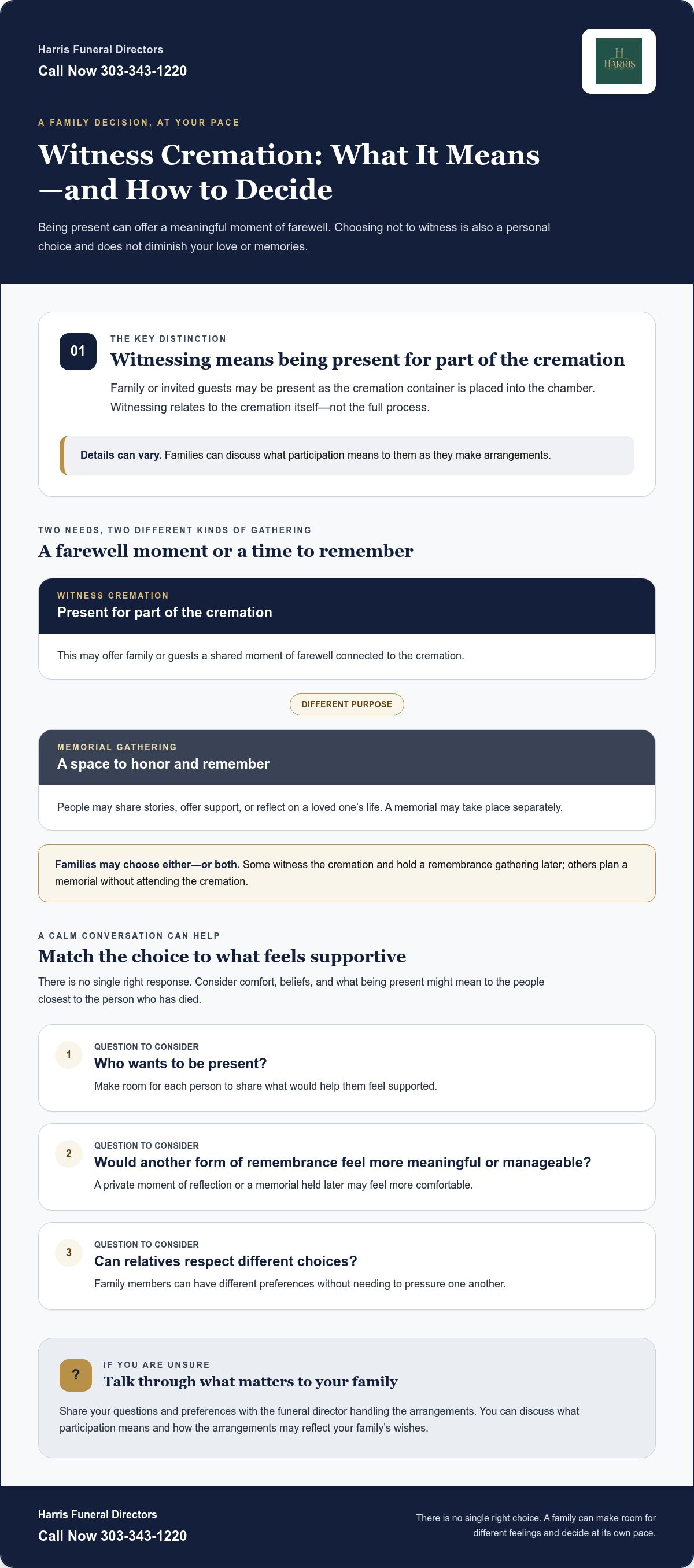
A witness cremation service allows family members or invited guests to be present for part of the cremation process. It is a way to be there at a meaningful moment, if that feels right for the people closest to the person who has died.
For families wondering what is a witness cremation service, the key distinction is that witnessing relates to the cremation itself. It isn’t the same as attending a funeral or memorial, which centers on gathering to honor and remember someone. The details of a witness arrangement can vary, so families can discuss what participation means to them as they make cremation arrangements.
How Is Witness Cremation Different From a Memorial Service?
A witness cremation and a memorial serve different purposes. Witnessing gives family or guests the opportunity to be present for part of the cremation. A memorial is a gathering focused on remembrance, where people may share stories, offer support, or reflect on a loved one’s life. One is connected to the cremation; the other creates space for honoring a person together.
A memorial may take place separately, depending on family preferences and arrangements. For example, relatives might choose to witness the cremation and hold a remembrance gathering later, or plan a memorial without attending the cremation. These choices aren’t an indication of how much someone cared. Families can consider what feels supportive, including whether people want a shared moment of farewell, a gathering to remember, or both.
How Can Families Decide Whether Witnessing Feels Right?
There’s no single right choice. Consider your comfort, beliefs, and what you hope being present might mean. Asking “what is a witness cremation service, and what would attending mean to us?” can help turn uncertainty into a family conversation. Understanding what is a witness cremation service in practical terms may also help you decide whether the experience aligns with your needs and values.
Choosing not to witness does not diminish your love or the memories you carry.
What Questions Can Help You Reflect Before Deciding?
A calm family conversation can make room for different feelings. Talk about who wishes to attend and what each person expects from the experience. Then consider whether another form of remembrance might feel more comfortable, such as a private moment of reflection or a memorial held later.
- Who wants to be present, and what would help each person feel supported?
- Would a separate remembrance feel more meaningful or manageable?
- Can relatives respect different choices without pressuring one another?
What Can Aurora Families Do Next?
Share your questions and preferences with the funeral director handling the arrangements. You can talk through what matters to your family and how cremation arrangements may reflect those wishes. Harris Funeral Directors is a family-owned funeral home serving Aurora and nearby communities with compassionate, personalized care.
For guidance as you consider your arrangements, explore the Cremation Services in Aurora, Colorado: A Compassionate Guide for Families. You’re welcome to reach out to Harris Funeral Directors at a pace that feels comfortable.
Harris Funeral Directors
Call Now 303-343-1220
Take the Next Step at Your Own Pace
There’s no need to make this decision by measuring your feelings against anyone else’s. Let the conversation begin with what would help your family feel cared for, whether that means making space for a quiet goodbye or planning a remembrance in another way. The question “what is a witness cremation service” can be a starting point for discussing the choices that feel right to you.
Harris Funeral Directors is family-owned and operated, providing cremation services for families in Aurora and nearby communities. If you’d like support thinking through arrangements and personal preferences, you’re welcome to reach out. A thoughtful conversation can help you take the next step with greater clarity.
May your family find a way to say goodbye that feels true to the love you share.
Harris Funeral Directors
Call Now 303-343-1220
Frequently Asked Questions
What happens during a witness cremation service?
Before making arrangements, ask the funeral director to walk you through the specific sequence, where guests will gather, and what they may see. You can also ask how long attendees are expected to be present and whether there’s a quiet place to step away. These practical details can make the experience feel less uncertain for families in Aurora and nearby communities.
Can family members choose whether to witness a cremation?
Families can share their preferences as arrangements are discussed. It may help to write down questions in advance or choose one relative to help communicate the family’s thoughts. That person can make sure everyone has a chance to express concerns, including relatives who aren’t comfortable speaking during an emotional conversation. No one needs to explain or defend a personal preference.
Is witnessing a cremation emotionally difficult?
It may be, and feelings can change before, during, or after the experience. Consider what support would be helpful afterward, such as time with someone you trust or a quiet period without other obligations. If you’re unsure how you might respond, it’s reasonable to discuss your concerns with the funeral director before deciding. Give yourself permission to take the decision slowly.


