

Harris Funeral Directors
Call 303-343-1220
What if a difficult day doesn’t mean you’re moving backward? Coping with the first year of grief can feel unpredictable. A stretch of relative calm may be followed by a holiday, anniversary, or everyday reminder that brings sadness close again.
If you’ve wondered whether you should be feeling differently by now, you’re not alone. Grief doesn’t follow one timetable, and a hard day doesn’t erase the steps you’ve taken to keep going.
This guide offers practical ways to meet difficult moments, care for yourself in manageable steps, and tell others what kind of support would help. You’ll also find ideas for approaching meaningful dates and locating support in Aurora, Denver, Commerce City, Arvada, Thornton, and Lakewood.
Coping with the first year of grief: why there is no single timeline
If you’re coping with the first year of grief, you may notice that your feelings don’t move in one direction. A calmer day doesn’t mean you’ve left your sadness behind, and a difficult moment doesn’t mean you’ve lost ground. Grief can change over time, but there’s no schedule you need to follow.
Grief is an individual response to the loss of someone or something meaningful. It can shape thoughts, feelings, and daily routines differently for each person. There’s no single way it has to look.
You might miss someone deeply while also finding comfort in family, familiar routines, or a memory that makes you smile. These feelings can exist side by side. You don’t have to choose between honoring your loss and allowing yourself a moment of ease.
Why grief can feel different from one day to the next
Everyday reminders can bring someone to mind: setting the table, passing a familiar place, or reaching for the phone to share news. Significant dates, such as a birthday or holiday, may feel especially tender. The same reminder can affect you differently at different times, and it may not affect another person in the same way.
Some days, you may feel numb or find it hard to focus. At other times, emotions may feel close and overwhelming. You don’t need to explain these shifts or measure them against someone else’s experience. If a day feels difficult, make space for what you feel and choose one manageable thing to help you through it, such as resting, asking for company, or handling one necessary task.
Practical ways to cope with grief through ordinary days and milestones
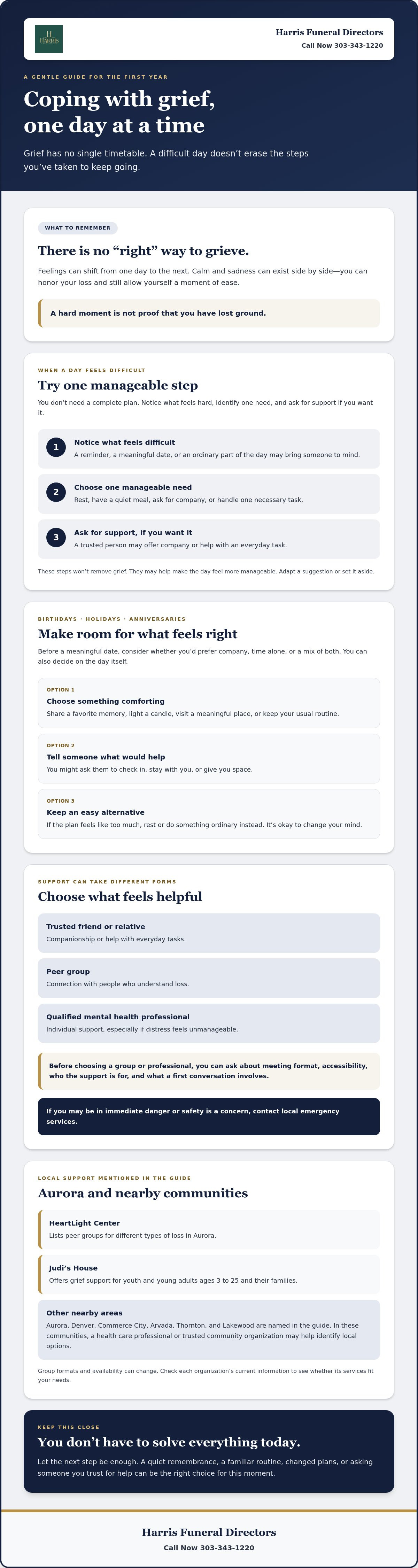
On a hard day, you don’t need a complete plan. Try a small sequence: notice what feels difficult, identify one manageable need, then ask someone for support if you want it. Your need might be a quiet meal, help with an errand, or company while you sit with a memory. These steps won’t remove grief, but they can make the day feel more manageable.
Keep your approach flexible. Try a suggestion, adapt it, or set it aside. Coping with the first year of grief isn’t a task to complete correctly. It’s about finding choices that suit you in the moment.
How to prepare for anniversaries and other difficult dates
Before a birthday, holiday, or anniversary, consider what you want from the day. Would you prefer company, time alone, or a mix of both? You might share a favorite memory, light a candle, visit a meaningful place, or keep your usual routine. It’s also okay to change plans or decide on the day itself.
A simple plan can leave room for change:
- Choose one option that feels comforting, such as a quiet ritual or a shared meal.
- Tell someone what would help. For example, ask them to check in, stay with you, or give you space.
- Make an easy alternative. If the plan feels like too much, rest or do something ordinary instead.
If remembering someone brings questions about ceremony or arrangements, review traditional burial service information for practical details. There’s no right way to mark a date. Choose what feels meaningful, and give yourself permission to change your mind.
Finding support during the first year of grief in Aurora and Denver
Support can take different forms. A trusted friend or relative may offer companionship or help with everyday tasks. A peer group can connect you with people who understand loss, while a qualified mental health professional can provide individual support. You can choose one kind of support or combine them, depending on what feels helpful.
In Aurora, HeartLight Center lists peer groups for different types of loss. Judi’s House offers grief support for youth and young adults ages 3 to 25 and their families. Group formats and availability can change, so check each organization’s current information to see whether its services fit your needs. If you’re in Denver, Commerce City, Arvada, Thornton, or Lakewood, you can also ask a health care professional or trusted community organization about appropriate local options.
Choosing support that feels right for you
Before joining a group or contacting a professional, ask whether meetings are in person or virtual, what accessibility options are available, and who the support is intended for. You can also ask what a first conversation involves. It’s reasonable to look for a setting where you feel respected and comfortable.
If your distress feels unmanageable, consider reaching out to a qualified mental health professional. If you may be in immediate danger or safety is a concern, contact local emergency services.
Harris Funeral Directors can answer questions about its funeral services, but it doesn’t provide grief counseling. If practical arrangements are relevant, review funeral service information.
Take the next day one step at a time
Coping with the first year of grief doesn’t mean following a timetable or feeling the same way each day. Difficult moments can return. Meeting one immediate need or asking someone you trust for help may make the day more manageable. For meaningful dates, choose what feels right, whether that’s a quiet remembrance, a familiar routine, or changed plans. Support from trusted people, peer groups, or qualified professionals can also help you feel less alone.
Harris Funeral Directors is an independent, family-owned funeral home serving Aurora and nearby communities. Its offerings include traditional burial, cremation, pre-planning, veteran services, and obituary notifications. For funeral-related information, visit:
There’s no need to solve everything today. Let the next step be enough, and allow yourself to seek support as you need it.
Frequently Asked Questions
Is it normal to still grieve a year after a death?
Yes. Grief can continue beyond the first year, and there’s no universal deadline for how long it should last. You may have days that feel steadier and others when sadness returns. A difficult date or reminder can bring feelings close again. Your experience doesn’t have to match anyone else’s, and continuing to grieve doesn’t mean you’re doing anything wrong.
How can I cope with the first year of grief?
Coping with the first year of grief can begin with small, practical choices. Notice what feels hardest, choose one manageable need, and ask someone you trust for help if you’d like. That might mean company, help with a task, or time to rest. If you live in Aurora, Denver, Commerce City, Arvada, Thornton, or Lakewood, check current local support options to find a format that suits you.
What can I do when the first anniversary of a death feels difficult?
Consider what you’d like from the day, then make a flexible plan. You might share a memory with someone, create a quiet personal ritual, keep your usual routine, or set aside time to rest. Let a trusted person know whether you’d welcome company or prefer space. You can change your plans or skip a remembrance activity if it doesn’t feel right.


