

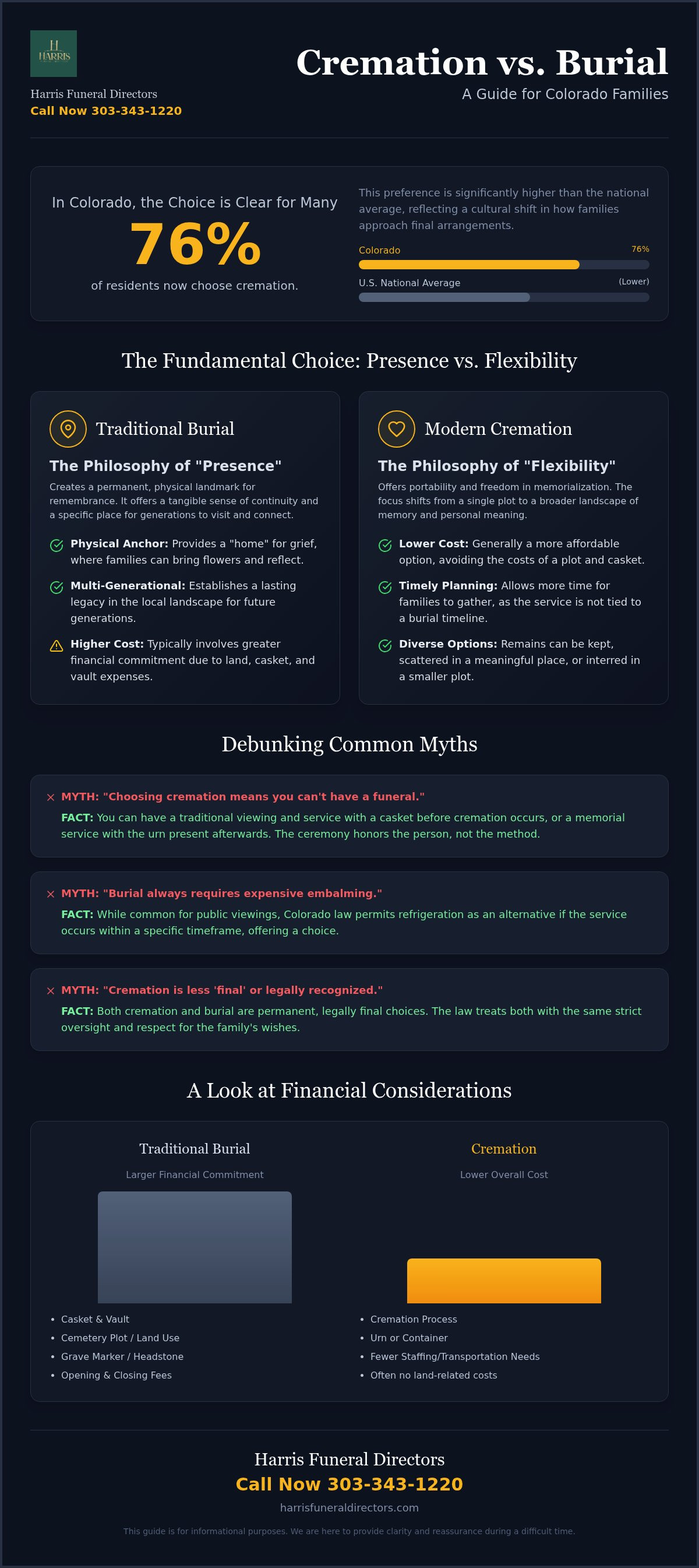
Approximately 76% of Colorado residents now choose cremation, a figure that sits significantly higher than the national average. This shift reflects a changing landscape in how we say goodbye, yet the decision between cremation vs burial remains deeply personal. It's natural to feel a sense of pressure when choosing a final resting place. You want to ensure the farewell is dignified while also staying mindful of your family's financial health and long-term needs.
We understand that managing these choices during a period of grief is difficult. You might worry about making a mistake or feel confused by Colorado's specific regulations and Medicaid assistance programs. This guide is designed to provide the clarity and reassurance you need. We'll walk through the emotional and practical differences of each path, from the flexibility of modern memorials to the tradition of a permanent gravesite. By looking at the facts and your family's unique values, you can find a way to honor your loved one that feels truly right for your heart and your budget.
Cremation vs. Burial: Understanding the Fundamental Differences
Deciding how to honor a loved one is a deeply personal journey that carries significant emotional weight for families in Aurora. This choice often marks the first step in the grieving process, serving as a reflection of a person's values, faith, and legacy. Burial is the traditional placement of remains in a casket within a cemetery plot, while cremation is the process of reducing remains to bone fragments using high heat. Both burial and cremation are dignified methods of final disposition that provide a respectful way to honor a life well-lived.
When you sit down to consider these options, it's helpful to look past the logistics and focus on what feels most meaningful for your family. We see many families weigh the tradition of a graveside service against the modern flexibility of a memorial held at a later date. There is no right or wrong answer; there's only the choice that brings your family the most peace and comfort during a difficult time.
The Core Philosophical Shift
The choice between cremation vs burial often comes down to how a family views the physical space of remembrance. Burial focuses on "presence." It creates a permanent physical landmark, a specific spot on the map where children and grandchildren can return for generations. For many, there is a deep sense of stability in knowing exactly where a loved one rests.
Cremation represents a shift toward "flexibility." It allows for portability, which is often a priority for families who move frequently or who want to share remains among several siblings. In Colorado, our connection to the outdoors often leads families to choose cremation so they can scatter remains in a place that held special meaning, such as a favorite mountain trail or a quiet park. This path doesn't lack a sense of place; it simply changes the nature of that place from a single plot to a broader landscape of memory.
Common Misconceptions
One of the most frequent myths we hear is that choosing cremation means you cannot have a funeral service. This isn't true. You can still hold a traditional viewing with a casket before the cremation takes place, or you can host a beautiful memorial service with an urn present. The ceremony is about the person, not the method of disposition. You can explore our transparent service packages to see how both options can include meaningful ceremonies.
Another common concern involves the preparation of the body. Some families worry that burial requires expensive embalming in every situation. While embalming is common for public viewings, Colorado law actually allows for refrigeration if the burial or cremation occurs within a specific timeframe. Finally, it's important to know that both choices are permanent and legally final. Once a family decides, the law treats both paths with the same level of strict oversight and respect to ensure the deceased is cared for according to the family's wishes.
The Emotional and Practical Considerations of Your Choice
Choosing between cremation vs burial is rarely just about the physical process. It's about how your family needs to move through the days, months, and years following a loss. Traditional burial offers a tangible sense of continuity. It provides a physical space where you can touch a headstone and feel a connection to those who came before. On the other hand, cremation offers a different kind of freedom. It allows for lower costs and more time to gather family members who may be scattered across the country.
Both paths have their unique challenges. Burial involves significant land use and higher financial commitments. Cremation can sometimes leave family members feeling a lack of "finality" if there isn't a designated place to visit. Ultimately, the right choice is the one that allows your heart to rest. We believe in providing clear information on funeral costs and consumer rights so you can make a decision rooted in confidence rather than stress.
The Power of a Permanent Memorial
For many in Aurora, visiting a local cemetery like Fairmont or Fort Logan National Cemetery is a vital ritual of remembrance. A grave marker acts as a physical anchor for your grief. It's a "home" where you can bring flowers, share news of the family, and find a quiet moment of reflection. This multi-generational connection is a powerful benefit of burial, ensuring that a person's name remains etched in the local landscape for decades to come. It provides a sense of belonging that many families find essential for their long-term healing.
Flexibility and Modern Memorialization
Cremation offers a different type of grace. Because there is no immediate rush for a burial service, families have the flexibility to wait for distant relatives to travel to Denver. This can be especially helpful during the winter months or when unexpected travel needs arise. You aren't limited to a single outcome, either. You can choose a beautiful urn for a home mantel, scatter remains in a meaningful place, or even bury the urn in a smaller, more affordable plot.
One of the most comforting options we provide is a cremation service that includes a traditional viewing. This allows your family to have the closure of a final goodbye with a casket present, followed by the flexibility of cremation. If you're feeling unsure about which path fits your needs, you can explore our services overview to see how we can personalize either choice for you.
Comparing Costs and Local Financial Assistance in Aurora
The choice between cremation vs burial doesn't have to be a source of financial stress for your family. While the emotional weight of this decision is often the first thing people consider, the practical reality of a budget is a vital part of the planning process. A traditional burial typically involves a larger financial commitment because it requires more physical resources and land. In contrast, cremation is often chosen for its simplicity and lower overall cost. You can find a detailed breakdown of these choices in our Harris Funeral Directors Pricing and Packages.
Choosing an affordable option doesn't mean you're sacrificing quality or dignity. We believe in transparency because it allows you to focus on healing rather than worrying about hidden fees. Families often weigh the long-term Environmental Impact of their choice alongside the financial costs, and we're here to help you find that balance. A traditional burial typically includes several specific components:
- The casket, which varies in material and design.
- A burial vault, which most cemeteries in the Aurora area require to protect the grave.
- The cemetery plot and the separate fees for opening and closing the grave.
- Professional service fees for the funeral director and staff.
Cremation costs are structured differently, focusing on the process rather than the physical land. These typically include the cremation fee, the selection of an urn, and any fees for a memorial service or public viewing you choose to hold. By understanding these differences, you can choose a path that honors your loved one's legacy without creating a financial burden for the living.
Colorado Medicaid and No-Cost Cremation
For families facing financial hardship, Aurora offers specific support systems that can provide immense relief. The Colorado Department of Human Services provides a burial assistance program that can grant up to $1,500 for those who qualify. This is a critical resource for ensuring every individual receives a dignified farewell regardless of their financial situation. We have extensive experience helping families coordinate with these programs to create Medicaid-friendly plans. For a deeper look at how this assistance works, read our guide on Medicaid Cremation in Aurora.
Veteran Benefits and Honors
Our local veterans have earned the right to a respectful and honored rest. For those choosing burial, Fort Logan National Cemetery provides a beautiful and historic setting. The VA provides significant support for our heroes, often offering up to $1,002 for funeral costs and an additional $1,002 for a plot for non-service-connected deaths. If the death was service-connected, that allowance can increase to $2,000. These benefits apply to both burial and cremation, helping to offset the costs of honoring a hero's legacy. We take great pride in our Veteran Funeral Services in Aurora, ensuring that every detail of military honors is handled with the precision and respect it deserves.
Religious Traditions and Environmental Impact
Many families find that their spiritual beliefs provide the clearest compass when weighing cremation vs burial. Faith traditions often offer a framework that helps simplify these complex emotional choices. In Aurora's diverse community, we see a wide range of religious perspectives that honor the body in unique ways. Whether your decision is rooted in ancient ritual or a modern sense of stewardship for the earth, both paths can be walked with deep respect and intention.
It's important to remember that these two options aren't just about the physical remains. They're about how we express our values and our hope for the future. We encourage you to consult with your local Aurora faith leaders early in the process. They can provide specific guidance that ensures your choice aligns with your congregation's teachings and provides the spiritual comfort your family needs during a time of loss.
Faith-Based Decision Making
For many traditional faiths, burial remains the standard of care. In Judaism and Islam, burial is typically viewed as the only permissible method because it's seen as the most respectful way to return a gift from God back to the earth. These traditions emphasize the natural return to the soil and often involve specific rituals that must take place shortly after death.
The Catholic Church's stance has evolved over the decades. While cremation has been permitted since 1963, the Church still expresses a strong preference for burial. If a family chooses cremation, the Vatican's current instructions require that the remains be kept in a sacred place, such as a cemetery or columbarium. This ensures the deceased remains part of the community's collective memory and prayer. In the Denver faith community, these liturgies and rituals provide a vital sense of closure and continuity for grieving families.
Eco-Conscious Final Arrangements
As the Aurora and Denver metro areas continue to expand, land conservation has become a significant concern for many residents. Traditional burial requires a permanent use of land and often involves metal caskets and concrete vaults that don't biodegrade. However, the "green burial" movement is growing in Colorado. This approach avoids embalming chemicals and uses biodegradable caskets or shrouds to minimize the impact on the local ecosystem. It's a way to return to the earth as naturally as possible.
Cremation is often viewed as the more "eco-friendly" choice because it doesn't require a large cemetery plot. While it does have a carbon footprint due to the energy used in the process, it avoids the long-term land-use issues associated with traditional cemeteries. You can choose "greener" paths within either option, such as opting for refrigeration instead of embalming. Colorado law requires a body to be either embalmed or refrigerated if held for more than 24 hours, and choosing refrigeration is a simple way to reduce chemical use. If you have questions about how to blend your religious requirements with an eco-conscious farewell, our team is here to help. You can learn more about our personal services and how we accommodate various faith traditions and environmental values.
Guidance for Families: How to Make the Right Decision
Choosing between cremation vs burial is a journey that requires both the heart and the mind. It's often the last great act of love you'll perform for your family member. To find the path that offers the most peace, we suggest following a few simple steps. First, look for any documented wishes in a will or a pre-arrangement file. Knowing exactly what your loved one wanted can remove a massive weight from your shoulders. If no written plan exists, try to recall conversations about their values or their favorite places in Colorado.
Next, think about your family's long-term emotional needs. Does the idea of a physical gravesite at a place like Fairmont Cemetery bring comfort, or does the flexibility of scattering remains in the mountains feel more appropriate? If you're a veteran family, remember that Fort Logan National Cemetery is a local treasure that offers specific honors for both choices. Setting a realistic budget is also essential. We recommend exploring local programs like Denver Human Services Burial Assistance or VA benefits early on to see what support is available. Finally, speak with a director who values transparency over sales. You deserve to explore personalized packages without feeling rushed or pressured. You can Plan Ahead with Harris Funeral Directors to begin this conversation in a quiet, supportive environment.
The Value of Pre-Planning
Pre-planning is one of the most selfless gifts you can leave for your family. It removes the burden of making difficult choices during the first few days of intense grief. When you decide on your preferences now, you ensure your legacy is honored exactly as you wish. It also allows you to lock in today's prices for future services, protecting your family from the rising costs of both burial and cremation. For more information on how to start this process, read our guide on Funeral Pre Planning Aurora.
Next Steps for Immediate Need
If a death has just occurred in the Aurora area, please know that you don't have to walk this path alone. Your first priority should be your own well-being and the care of your family. Once you're ready, reach out for a transparent, no-pressure consultation. We can help you manage the immediate logistics, from coordinating with local hospitals to filing for death certificates with the state of Colorado. We're here to serve as your steady partner during these first few hours. If you need support right now, please visit our Immediate Need Services page for guidance on what to do next.
Finding Peace in Your Family's Decision
Choosing how to honor a life is a significant responsibility, but you don't have to carry that weight alone. Whether your family settles on cremation vs burial, the most important factor is that the decision reflects your loved one's unique legacy and brings you a sense of lasting peace. We've explored how emotional needs, financial realities, and spiritual traditions all play a role in this journey. By understanding the support available through Medicaid assistance and veteran honors, you can move forward with confidence and clarity.
As a family-owned business that has been serving the Aurora community for years, we're committed to providing a steady hand and a compassionate heart. We specialize in Medicaid no-cost cremation and offer transparent, tiered pricing so you never have to worry about hidden fees during a time of grief. Our role is to be your advocate, ensuring that every detail is handled with the dignity your family deserves. We're ready to listen to your story and help you create a meaningful farewell that fits your budget and your values.
Speak with a Compassionate Funeral Director in Aurora Today
You've taken a brave first step by seeking information; we're here to help you with the rest.
Common Questions About Final Arrangements in Denver
Is cremation significantly cheaper than burial in Colorado?
Yes, cremation is typically more affordable because it eliminates the need for a cemetery plot, a burial vault, and a traditional casket. While the choice between cremation vs burial involves many emotional factors, the financial difference is often several thousand dollars. Families can still choose to add services like a viewing or a memorial, which will influence the final cost, but the baseline expenses for cremation are lower.
Can we have a traditional funeral with a viewing if we choose cremation?
You can absolutely have a traditional funeral with a viewing even if you choose cremation. Many families find comfort in a public or private viewing with a rented casket before the cremation process takes place. This allows for the traditional rituals of a final goodbye while still maintaining the flexibility and portability that cremation offers for the final resting place and long-term remembrance.
Does Medicaid cover the cost of burial in Aurora?
Medicaid does provide financial assistance for burial in Aurora through the Colorado Department of Human Services. For qualifying individuals, the program provides up to $1,500 toward expenses. However, the total cost of the funeral cannot exceed $2,500 to remain eligible for this benefit. This assistance is available for both burial and cremation services to ensure every resident receives a dignified and respectful farewell regardless of their financial situation.
Can cremated remains be buried in a local cemetery?
Yes, cremated remains can be buried in almost any local cemetery in the Aurora area. Many cemeteries offer specific urn gardens or columbarium niches for this purpose. If you already have a family burial plot, you can often bury an urn within that same space. This provides a permanent place for remembrance and a physical site for future generations to visit while honoring the preference for cremation.
What are the environmental differences between cremation and burial?
The environmental differences involve land use and carbon footprints. Traditional burial requires a permanent plot and often involves embalming chemicals. Cremation avoids long-term land use but requires energy for the process. When weighing cremation vs burial, many eco-conscious families in Denver now look toward green burial options or choosing refrigeration over embalming to minimize their impact on the local Colorado landscape and preserve our natural beauty.
How do I know if my loved one's veteran status provides free burial?
Eligibility for veteran burial benefits usually requires a discharge other than dishonorable. Veterans are entitled to a burial at no cost in a national cemetery, such as Fort Logan, which includes the grave site, opening and closing of the grave, and a government headstone. For burial in a private cemetery, the VA may provide a burial allowance to help offset the costs, though it typically doesn't cover the full expense.
Can I switch from burial to cremation (or vice versa) after pre-planning?
It's usually possible to switch between burial and cremation after you've started a pre-planning contract. We understand that family needs and personal preferences can change over time. If you've set aside funds in a trust or insurance policy, those assets can typically be reallocated to cover the costs of the new service type. We recommend reviewing your plan periodically with your director to ensure it still reflects your current wishes.
What religions do not allow cremation?
Orthodox Judaism and Islam generally don't allow cremation, as both faiths emphasize the importance of a natural burial and a return to the earth. Similarly, some conservative Christian denominations and the Eastern Orthodox Church strongly prefer traditional burial. We suggest speaking with your faith leader in Aurora to ensure your choice aligns with your religious traditions and provides the spiritual comfort your family needs during a time of loss.


