

Imagine standing at the chapel doors, heart heavy with loss, only to feel a sudden surge of anxiety because you aren't sure where to sit or how to lead the procession. It's a common fear. The last thing you should worry about is a breach of decorum while you're mourning. Understanding funeral etiquette for immediate family isn't about following rigid, cold rules. Instead, it acts as a supportive framework that provides much-needed clarity when your world feels chaotic.
We know that managing family expectations while grieving is an immense burden. This 2026 checklist is designed to give you a clear sense of your responsibilities, from seating orders to standing positions. You'll gain the confidence to move through the service smoothly, allowing you to focus entirely on honoring your loved one. We'll walk through the essential logistics, ensuring every detail reflects the dignity your family deserves.
Defining the Immediate Family and Your Primary Roles
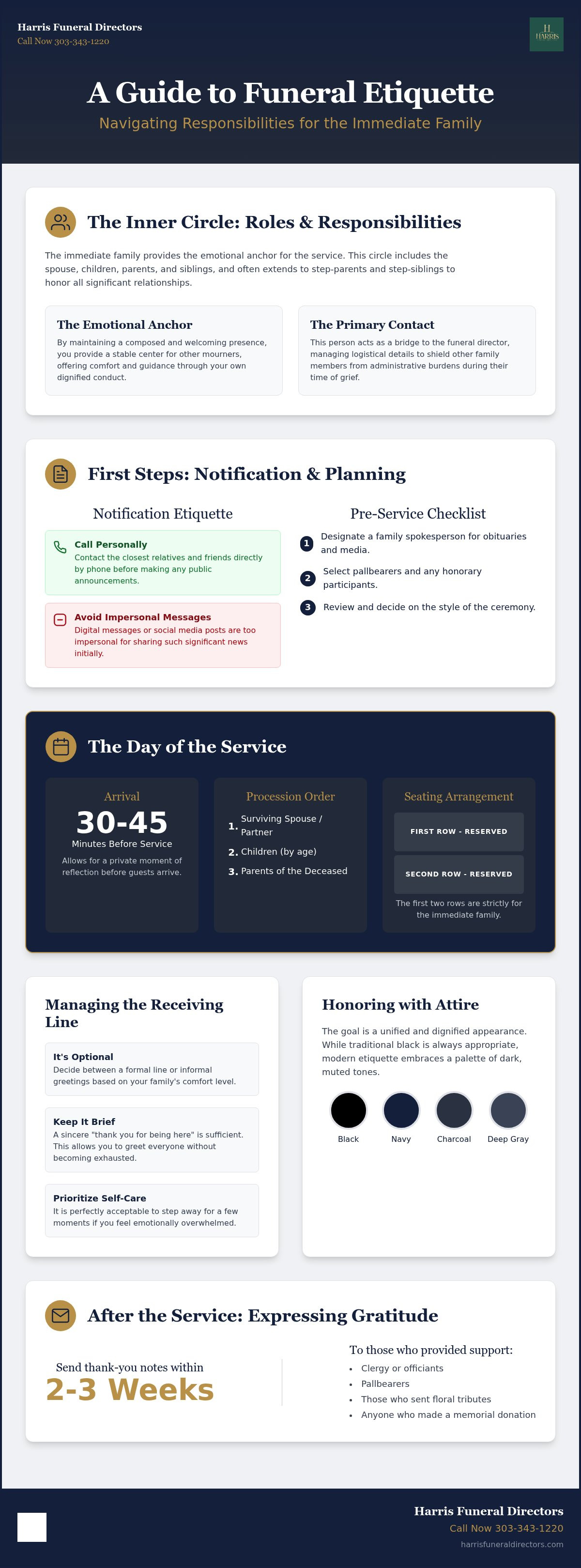
The immediate family circle typically includes the spouse, children, parents, and siblings of the deceased. In modern arrangements, this circle naturally extends to step-parents and step-siblings to ensure every significant relationship is honored. Proper funeral etiquette for immediate family suggests that these individuals serve as the emotional anchor for the entire service. By maintaining a composed and welcoming presence, you provide a stable center for other mourners who may feel uncertain about how to express their own grief.
One of the most vital roles is the Primary Contact. This person acts as the dedicated bridge between your family and our team at Harris Funeral Directors. They manage the logistical flow, making sure that every detail aligns with the family's wishes without requiring a group consensus for every small decision. This role is demanding, but it allows other grieving members to step back from the administrative burden and focus on their personal journey of remembrance.
Notification etiquette requires a personal touch. When a death occurs, you should call the closest relatives and friends immediately. Digital messages or social media posts are often too impersonal for such significant news. Speak to the inner circle directly before any public announcements are made. This respectful approach ensures that those most affected hear the news in a supportive way, rather than discovering it through a screen.
The Checklist for Pre-Service Responsibilities
To keep the planning process manageable, consider these specific steps as you prepare for the service:
- Designate a family spokesperson: This person handles the obituary notifications and any media inquiries to keep the message consistent and respectful.
- Select participants: Coordinate with your funeral director to choose pallbearers and honorary participants who had a deep connection to your loved one.
- Review service options: Read through our Traditional Burial Services guide to decide which ceremony style best reflects the legacy you wish to celebrate.
Taking these steps early helps define the funeral etiquette for immediate family and sets a clear path forward. It ensures that everyone knows their place and their purpose, reducing stress during the actual ceremony.
Service Day Etiquette: A Checklist for Processions and Seating
Arriving 30 to 45 minutes before the service begins provides your family with a vital window of peace. Whether you are meeting at our Aurora chapel or the graveside, this early arrival allows for a private moment of reflection before guests arrive. When the service starts, the traditional procession order usually begins with the surviving spouse or partner, followed by children and then parents. This structure is a core part of funeral etiquette for immediate family, helping maintain a respectful flow while honoring the closest relationships.
Proper seating etiquette dictates that the first two rows remain strictly reserved for the inner circle. This ensures those most affected have a clear view and easy access to the ceremony. If your family is large, designate these seats for the closest survivors first and guide extended relatives to the rows immediately behind. Clear coordination with your funeral director helps manage this seating without any awkwardness during the service. If you feel uncertain about these logistics, you can contact our team to discuss how we can support your specific needs.
Managing the Receiving Line with Grace
Deciding between a formal receiving line or informal greetings depends entirely on your comfort level. If you choose a formal line, the surviving spouse or parent typically stands closest to the casket or urn to receive the first condolences. Keep your interactions brief and sincere; a simple "thank you for being here" is perfectly sufficient for the moment. This helps the line move steadily for all guests and prevents you from becoming physically or emotionally exhausted.
Remember that self-care is essential during this time. It is completely acceptable to take a break or step away for a few minutes if the emotional burden becomes too heavy. Your guests understand that you are grieving, and they will respect your need for a moment of quiet. Maintaining your well-being is just as important as following the standard funeral etiquette for immediate family.
Dress Code and Communication: Honoring the Legacy
While traditional black remains a respectful choice, many families in the Denver area now embrace a broader palette. Modern funeral etiquette for immediate family has shifted toward dark, muted tones like navy, charcoal, or deep olive. These colors maintain a sense of professional solemnity while feeling more personalized for a celebration of life. The goal is to present a unified, dignified appearance that honors your loved one without feeling overly rigid or outdated.
Communication after the service is just as vital as the ceremony itself. We suggest sending personalized thank-you notes within two to three weeks to those who provided specific support. This circle includes the clergy, pallbearers, and anyone who sent floral tributes or memorial donations. For families of service members, it's also important to understand the specific protocols involved in Military Honors. These traditions require a high level of decorum, which our team manages with deep respect for the veteran's service and sacrifice.
Guidelines for Meaningful Tributes
If you are delivering a eulogy, prepare your remarks well in advance. Aim for a length of 3 to 5 minutes to keep the service moving at a respectful pace. This timeframe allows you to share heartfelt memories without the pressure of a lengthy speech. We also recommend setting clear boundaries regarding digital etiquette. It's perfectly acceptable to ask guests to silence phones and refrain from social media posts during the ceremony to protect the family's privacy and the sanctity of the moment.
Consulting with Funeral Pre Planning experts can provide additional clarity during this process. By documenting wishes ahead of time, you ensure that the dress code, speaking roles, and specific tributes perfectly reflect the deceased's personality. This thoughtful preparation allows the immediate family to focus on their emotional needs rather than logistical uncertainty.
Navigating Your Path with Dignity and Peace
Grieving is a deeply personal journey, but you don't have to manage the logistics alone. Understanding funeral etiquette for immediate family transforms a stressful day into a meaningful tribute. Designating a primary contact and arriving early for reflection creates the quiet space you need to focus. Whether you're coordinating seating or selecting a modern dress code, these small steps ensure your loved one's legacy is honored with the highest level of sincerity.
As a family-owned home, we provide personalized Aurora-based coordination and transparent, affordable service packages. You deserve a steady partner who walks alongside you with compassion and grace.
We're here to support your family every step of the way. You have the strength to lead this service, and we're honored to help you provide a beautiful, dignified farewell.
Frequently Asked Questions
Who is officially considered 'immediate family' for funeral seating?
The immediate family typically includes the spouse, children, parents, and siblings. In our Aurora and Denver communities, this circle often extends to include domestic partners and step-family members who held a close bond with the deceased. These individuals occupy the first two rows of the chapel. Identifying this group early ensures that everyone has a reserved place to mourn in comfort.
What is the correct order for the funeral procession to the cemetery?
The lead vehicle or police escort starts the procession, followed immediately by the hearse. The family vehicles follow next, usually led by the surviving spouse or partner. Children, parents, and siblings follow in the cars directly behind. This methodical order helps maintain safety and decorum as the group travels from the service location to the graveside for the final committal.
Does the immediate family have to stand in a receiving line?
No, participating in a formal receiving line is a personal choice based on your comfort level. While it provides a structured way to acknowledge guests, some families prefer to speak with attendees informally during the visitation. Proper funeral etiquette for immediate family focuses on your emotional well-being. You should choose the greeting style that feels most manageable during your time of grief.
What should the immediate family wear if it is a 'Celebration of Life'?
A Celebration of Life often suggests a less rigid dress code, though the attire should remain respectful and dignified. You might choose soft, muted colors or even a specific shade that your loved one particularly enjoyed. While black is a traditional choice, navy and charcoal are also very common in Colorado. The goal is to honor the person's legacy through a thoughtful and unified appearance.
How do we handle blended family members in the procession order?
Blended family members are typically integrated into the procession based on the depth of their relationship with the deceased. Step-parents and step-children often walk alongside or directly behind biological relatives. Clear communication during the planning process is essential to avoid confusion on the day of the service. We focus on ensuring every member feels included and respected within the funeral etiquette for immediate family.


