

What if the weight of saying goodbye didn't have to include the heavy burden of unexpected financial strain? It's a question many families in Aurora and Denver face when a loved one passes away, especially when they're already managing the complexities of a fixed income. You likely feel a deep responsibility to provide a dignified farewell, but the fear of hidden fees or confusing government requirements can make an emotional time feel even more stressful. We believe every life deserves to be honored with sincerity and respect, regardless of a family's current financial situation. That's why we specialize in providing a No-Cost Cremation Service for Medicaid eligible individuals, ensuring that your focus stays on remembrance rather than paperwork.
You shouldn't have to navigate the Colorado Burial Assistance Program alone during a time of grief. We understand that the rules can seem complicated, such as the requirement that total service costs stay under $2,500 to qualify for the state's $1,500 grant. This guide will walk you through exactly how these state benefits work and which public assistance programs, like Health First Colorado or the Old Age Pension, qualify for support. We'll show you how we act as your advocate, managing the Department of Human Services claims process from start to finish. Our goal is to provide you with clear guidance on eligibility and a path toward a respectful service that honors your loved one's legacy without out of pocket costs.
What is a Medicaid-Funded No-Cost Cremation Service?
A No-Cost Cremation Service for Medicaid beneficiaries is a specialized arrangement where the Colorado Burial Assistance Program (BAP) covers the essential costs of a direct cremation. When a loved one who was receiving public assistance passes away, the state of Colorado provides financial support to ensure they receive a dignified final farewell. This isn't a marketing gimmick or a discount; it's a specific state benefit designed to support families during their most vulnerable moments. By utilizing this program, families can avoid the heavy burden of end-of-life debt while still honoring their loved one's memory with a respectful and professional service.
We believe that every person deserves a respectful goodbye, regardless of their financial status. As your funeral directors, we act as the bridge between your family and the state agencies involved. We handle the complex Department of Human Services (DHS) paperwork and ensure that all requirements are met so the benefit is applied correctly. This allows you to focus on your family and your grief instead of navigating government bureaucracy or worrying about how you'll pay for the arrangements.
The Difference Between Medicaid and Burial Assistance
It's common to feel confused about how these benefits work together. While the Medicaid program provides essential healthcare and long-term care coverage during a person's life, it doesn't directly pay for funeral costs after they pass away. Instead, being enrolled in Medicaid or other public assistance programs often serves as the primary trigger for eligibility in a separate program. The Colorado Burial Assistance Program (BAP) is a state-funded safety net specifically created to help pay for final expenses. If your loved one was receiving Health First Colorado (Medicaid), Old Age Pension, or Aid to the Needy and Disabled, they likely qualify for this specific death benefit.
Why 'No-Cost' is a Reality in Colorado
In Colorado, the state provides a burial assistance grant of up to $1,500 for eligible individuals. For a cremation to be considered "no-cost" to the family, the funeral home must agree to structure their services so that the state's reimbursement covers the total bill. There's a strict rule to remember: for the grant to apply, the total cost of all services cannot exceed $2,500. If the total bill goes even one dollar over this limit, the state grant is forfeited entirely.
We've intentionally designed our services to align with these state mandates. By choosing a provider that accepts the state's maximum reimbursement as full payment for a direct cremation, you can truly achieve a dignified farewell without any out-of-pocket expenses. You can view our Pricing & Packages to see how we maintain transparency in all our arrangements. We're committed to ensuring that families in Aurora and Denver have access to these vital benefits without the fear of hidden fees or financial surprises.
Who Qualifies for Colorado’s Burial Assistance Program?
Determining eligibility for a No-Cost Cremation Service for Medicaid is often the first step toward finding peace of mind during a difficult transition. The Colorado’s Burial Assistance Program provides a vital resource for families who might otherwise struggle with final expenses. This program is specifically designed for residents who were enrolled in qualifying public assistance programs at the time of their passing. It isn't a general benefit for everyone on Medicare; rather, it's targeted toward those within the state's low-income assistance framework. The County Department of Human Services (DHS) makes the final decision on every claim, looking closely at both benefit status and available assets.
Eligible Medicaid Categories in Colorado
Most families we serve qualify through one of several key state programs. If your loved one was receiving Health First Colorado (Medicaid), they are likely eligible for support. Other common qualifying categories include:
- Old Age Pension (OAP): This typically applies to low-income residents aged 60 or older.
- Aid to the Needy Disabled (AND): This supports individuals with a qualifying disability.
- Colorado Works (TANF): This program provides temporary assistance for families in need.
- Supplemental Security Income (SSI): These recipients often qualify automatically, provided they meet the state's specific asset rules at the time of death.
We recommend checking the status of these benefits as soon as possible. Even if a loved one was eligible but not yet enrolled when they passed, the grant might not be accessible. Gathering the deceased's Social Security number and benefit ID cards is a helpful first step for our team to assist you.
Income and Asset Considerations
The state also evaluates the financial resources left behind by the deceased. If your loved one had a remaining bank balance or a life insurance policy, these funds are applied toward the cremation costs first. The state grant of up to $1,500 is intended to fill the gap when those personal assets aren't enough. However, a strict financial cap exists. The total cost of the cremation cannot exceed $2,500. If the total bill is higher, the state will not provide any funding at all.
For a more detailed look at how this works in our local area, you can read our Medicaid Cremation in Aurora guide. If you're unsure where to start, we can help you review these details to ensure a dignified No-Cost Cremation Service for Medicaid is achievable for your family.
How the No-Cost Cremation Process Works
When you lose someone you love, the last thing you want to handle is a complex financial transaction. Understanding how funds move from the state to the funeral home can provide a much-needed sense of relief. The $1,500 grant from the Colorado Burial Assistance Program is paid directly to the service provider rather than the family. This arrangement is designed to simplify the process, ensuring you don't have to pay large sums upfront and wait for a reimbursement check that might take weeks to arrive. It's a structured system that prioritizes the immediate need for care and dignity.
For this benefit to remain active, the total cost of all services must stay under $2,500. This cap includes everything from the funeral home’s professional fees to the crematory’s charges. If the total bill exceeds this amount, the state will not provide any funding. This is why a No-Cost Cremation Service for Medicaid is almost always a direct cremation. By focusing on the essential steps of the process, we can ensure the costs remain within the state's strict limits while still providing a service that honors your loved one with the highest level of respect.
Direct Cremation vs. Traditional Services
Direct cremation is the most common path for families utilizing state benefits. Traditional burials often involve cemetery plots, vaults, and caskets, which quickly push the total price beyond the $2,500 state limit. By choosing direct cremation, you ensure the service remains fully funded by the grant. We believe in transparency, and we help you understand how to add personal touches, like a private family viewing or a unique urn, without jeopardizing your eligibility. You can learn more about how these options compare in our guide to Cremation Services in Aurora.
The Role of the Funeral Director
We act as your advocate and guide throughout this journey. Our team takes the lead in gathering necessary documentation, such as the Social Security number and proof of Medicaid enrollment. We then file the formal state application with the correct County DHS office, whether you're in Arapahoe, Adams, or Denver. We know the specific requirements of each local office, which helps prevent delays or denials. Once the claim is approved, the state pays us directly for our services. Our commitment to you is simple: if the service qualifies for the full grant, we ensure your family is never billed for those covered arrangements. This allows you to focus on healing while we handle the logistical details of a No-Cost Cremation Service for Medicaid.
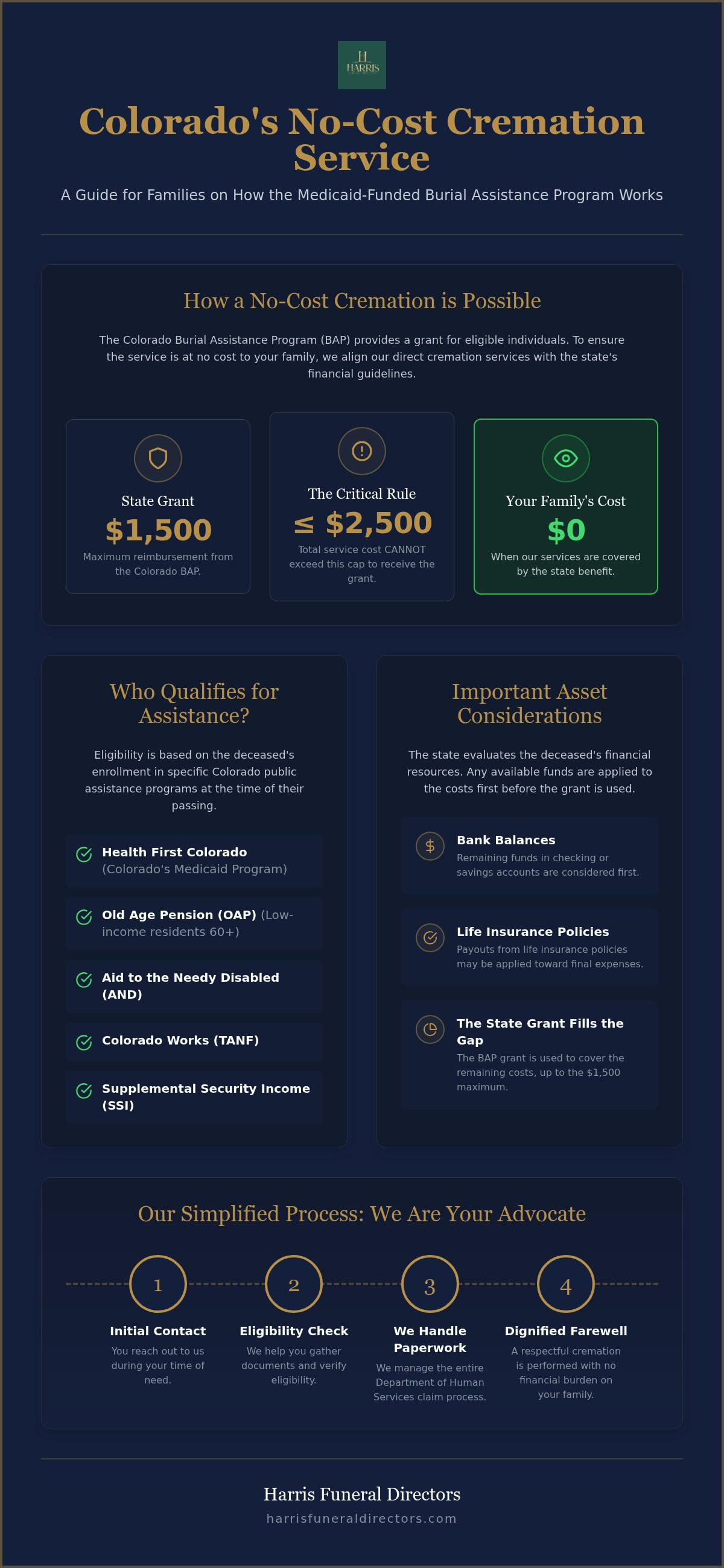
4 Steps to Arranging a Medicaid-Funded Cremation in Aurora
Taking the first step after a loss is often the hardest part. When you're managing the initial shock of a passing, the logistical requirements of a No-Cost Cremation Service for Medicaid can feel overwhelming. However, the process is manageable when broken down into clear, actionable steps. Your first priority is to notify the funeral home of your loved one's passing and mention their Medicaid status immediately. This early communication allows us to begin the verification process right away, ensuring we stay within the state's required timelines. Because an application for the death reimbursement benefit should be submitted within thirty days of the date of death, starting early is essential for securing the grant.
Once we've been notified, we begin coordinating with the appropriate agencies. Our team acts as your advocate, gathering the necessary details to build a successful claim. We know that you're focused on your family's emotional needs, so we take on the burden of the technical requirements. After we've confirmed the initial eligibility, we'll guide you through signing the final authorizations. These legal documents are necessary for the cremation to proceed, and we'll explain each form with the patience and clarity you deserve during this time.
Contacting Local DHS Offices
The coordination of benefits happens at the county level, and the specific office depends on where your loved one resided. For many families in Aurora, this means working with the Arapahoe County Department of Human Services. If your loved one was a resident of the Denver metro area, the application is submitted to the Denver Department of Human Services. While you can contact these offices directly, we usually initiate this contact for you. We maintain professional relationships with these departments and understand exactly which forms and email channels are required for a prompt response. This proactive approach helps prevent the common delays that occur when paperwork is filed incorrectly.
Required Documentation Checklist
To ensure a smooth process for a No-Cost Cremation Service for Medicaid, we'll need to collect several key pieces of information. Having these ready can significantly speed up the approval from the state. We recommend gathering the following:
- Legal Information: The deceased's full legal name and Social Security Number.
- Proof of Status: Any documentation showing Medicaid enrollment, SSI status, or participation in the Old Age Pension program.
- Financial Assets: Information regarding the deceased's remaining bank balances or any existing life insurance policies.
It's vital to be transparent about any existing funds. If your loved one had a small policy, we can help you understand Using Life Insurance for Funeral Expenses and how it interacts with the state grant. If you're ready to begin the process or have questions about a specific situation, we encourage you to reach out to our compassionate team for immediate assistance.
Dignified Care at Harris Funeral Directors
We believe that every individual deserves a final farewell that reflects the value of their life. Financial circumstances should never dictate the level of respect or care a family receives during their darkest hours. At Harris Funeral Directors, we treat every state-funded arrangement with the same meticulous attention and solemnity as any other service we provide. Our team is dedicated to ensuring that your loved one is honored properly, and we work tirelessly to make the No-Cost Cremation Service for Medicaid a seamless reality for families in our community. We understand the weight of your responsibility, and we're here to carry that burden with you.
Our commitment to dignity isn't just a professional standard; it's a personal promise. We recognize that behind every file and every state application is a person who was loved and a family that is hurting. By choosing a partner that values sincerity and empathy, you can find a sense of calm amidst the chaos of loss. We take pride in being a steady presence, offering the reassurance you need to navigate these difficult decisions with confidence and peace of mind.
A Trusted Partner in Aurora and Denver
Being a family-owned and operated business allows us to maintain a deeply personal connection with the people we serve. We aren't a distant corporate entity; we're your neighbors, and we understand the unique needs of families across the Aurora and Denver metro areas. This local perspective is invaluable when navigating the specific nuances of Colorado's state programs. We prioritize transparency in everything we do, ensuring you understand exactly how the state benefits align with the services provided. You can learn more about our core values and our long-standing commitment to the community by reading why choose us.
Our support extends beyond the initial arrangements. We know that the journey of loss doesn't end with the cremation process. That's why we offer a variety of grief resources to help you and your family find a path toward healing. Whether you need guidance on managing paperwork or emotional support as you process your grief, we're here to serve as your steady, experienced partner.
Immediate Assistance is Available
When a death occurs, the need for support is immediate. We're available 24/7 to assist you when you have an immediate need. In our first conversation, we'll listen to your needs with compassion and ask a few simple questions to help us understand how to best guide you. We'll discuss your loved one's status and begin the process of verifying eligibility for a No-Cost Cremation Service for Medicaid right away. Our goal is to lift the logistical and financial burdens from your shoulders so you can focus on what truly matters: honoring a legacy and remembering the person you loved. We'll be with you every step of the way, ensuring that the final journey is one of peace, respect, and dignity.
Secure a Dignified Farewell Today
Providing a respectful goodbye is a final act of love that shouldn't be overshadowed by financial anxiety. By understanding how the Colorado Burial Assistance Program works, you can secure a dignified No-Cost Cremation Service for Medicaid for your loved one. Success depends on verifying eligibility through programs like OAP or SSI and ensuring that the total cost stays within the state's strict financial limits. This path allows you to focus on the emotional journey of remembrance while the practical details are handled with professional care.
Our family-owned and locally operated team specializes in navigating these complex Colorado Medicaid claims so you don't have to. We're committed to providing compassionate care for all families in Aurora and Denver, ensuring every legacy is honored with sincerity. You have a trusted advocate ready to walk alongside you through every step of the paperwork and the arrangement process. Contact Harris Funeral Directors for Medicaid Cremation Assistance today to receive the guidance and support your family deserves. Peace of mind is within reach, and we're here to help you find it.
Frequently Asked Questions
Does Medicaid pay for the entire cremation cost in Colorado?
Medicaid doesn't pay directly; the Colorado Burial Assistance Program does. It provides a grant of up to $1,500. For a No-Cost Cremation Service for Medicaid to be truly cost-free, the funeral home must agree to accept this amount as payment in full. We structure our direct cremation services to fit within this limit, ensuring families don't face out-of-pocket expenses for the essential arrangements.
What happens if my loved one died in Denver but lived in Aurora?
Eligibility is determined by the county where the deceased lived, not where they passed away. If your loved one resided in Aurora, we'll coordinate with the Arapahoe County Department of Human Services. If they were a Denver resident, we'll file the claim through Denver County. We handle the logistical coordination between different local offices to ensure the paperwork is submitted to the correct jurisdiction for approval.
Can I still have a memorial service with a Medicaid cremation?
Yes, you can hold a memorial, but you must be careful with the total budget. The state mandates that the combined cost of all funeral and cremation services cannot exceed $2,500. If the total bill goes over this cap, you lose the $1,500 grant entirely. Many families choose to hold a private celebration of life at home or a local park to keep the funeral home costs within the eligible range.
How long does it take for the state to approve burial assistance?
Approval times vary by county, but it typically takes several weeks for the Department of Human Services to process a claim. Because we understand the urgency, we initiate the paperwork immediately. We don't wait for the state's check to arrive before proceeding with the cremation. Our team manages the communication with the county office so you're not left waiting for answers during your time of grief.
What if the deceased has a small life insurance policy?
The state considers all available assets, including life insurance, when calculating the grant. Any funds from a policy are applied to the cremation cost first. The Burial Assistance Program then covers the remaining balance up to the $1,500 maximum. If the life insurance policy is large enough to cover the entire $2,500 service cap, the state grant will not be applicable for those arrangements.
Is there a time limit to apply for Medicaid burial benefits?
You should submit an application within 30 days of the date of death. While an extension can sometimes be granted for good cause, it's best to act quickly to ensure your No-Cost Cremation Service for Medicaid is approved. We prioritize this timeline and help you gather the necessary documentation right away. This proactive approach prevents the loss of benefits due to missed state deadlines or administrative delays.
Will the cremation be handled differently because the state is paying?
Absolutely not. We believe every life deserves to be treated with profound respect and solemnity. Your loved one receives the same high-quality care and professional handling as any other family we serve. The state funding only changes the administrative side of how the bill is paid. Our commitment to dignity and sincerity remains constant, regardless of whether a service is funded privately or through the state burial grant.
Who do I call first, the DHS or the funeral home?
You should call the funeral home first. We act as your guide and advocate, handling the initial communication with the Department of Human Services on your behalf. We know the specific requirements for Aurora and Denver offices, which helps avoid common filing errors. By contacting us first, you allow our team to begin the eligibility check and secure your loved one's care without adding to your own mental burden.


