
What if the most dignified way to honor your loved one's legacy didn't have to come with a heavy financial burden? For many families in Aurora and Denver, the fear of being unable to afford final arrangements adds a layer of anxiety to an already painful time. You might worry that a no-cost option means sacrificing the respect your family member deserves, or perhaps you feel overwhelmed by the complex maze of state paperwork. It's natural to want a peaceful, sincere farewell without the stress of unexpected out-of-pocket expenses.
We're here to show you that a graceful goodbye is entirely possible through a specialized No Cost Cremation Service. By utilizing the Colorado Burial Assistance Program for Medicaid-eligible individuals or exploring whole-body donation for medical research, you can ensure your loved one is treated with the highest level of care. This guide explains how these programs work, who qualifies for state benefits, and how a compassionate advocate can manage the legal details on your behalf. You will discover how to navigate these options to achieve a zero-cost arrangement that focuses on remembrance and healing rather than financial strain.
Understanding No-Cost Cremation Options in Colorado
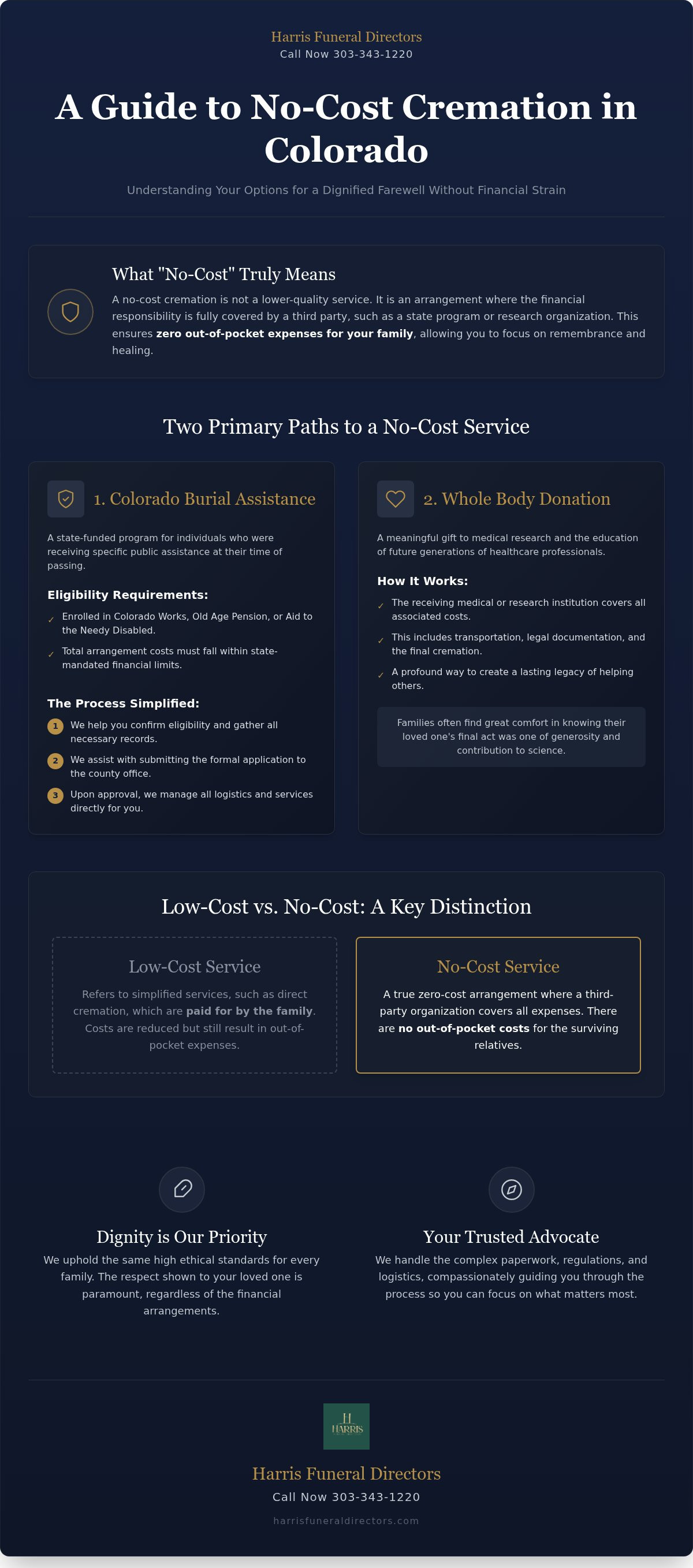
When we speak about a no-cost cremation service, we aren't referring to a discounted or lower-quality option. Instead, this term describes a specific arrangement where the financial responsibility is handled by a third party, such as a state benefit program or a medical research organization. These programs are designed to provide a safety net for families who might otherwise struggle to afford the final arrangements their loved ones deserve. In Colorado, this path ensures that every individual can receive a respectful farewell, regardless of their financial circumstances at the time of passing.
There are two primary ways to access these services in the Denver metro area. The first involves the Colorado Burial Assistance Program, which is available to individuals who were receiving specific state benefits, such as Medicaid or Old Age Pension, at the time of their death. The second path is through Whole Body Donation for medical science. Many families find comfort in knowing their loved one's legacy will contribute to the education of future doctors and the development of life-saving treatments. These organizations typically cover the entire cost of transportation and cremation as a gesture of gratitude for the donation.
Choosing a local partner like Harris Funeral Directors is essential when navigating these choices. As a family-owned business in Aurora, we act as a trusted advocate for your family. We understand the local regulations and the specific paperwork required by Colorado state agencies. Our goal is to handle the logistical burdens so you can focus on your grief and the celebration of a life well-lived.
The Difference Between 'Low-Cost' and 'No-Cost'
It's helpful to distinguish between these two terms to avoid confusion during the planning process. A low-cost service typically refers to direct cremation, which is a simplified and more affordable option paid for by the family. In contrast, a true No Cost Cremation Service results in zero out-of-pocket expenses for the relatives. To identify legitimate providers, look for transparency regarding which programs they partner with and how they handle the billing process with the state. A reputable provider will be open about eligibility requirements and the steps needed to secure funding.
Why Dignity is Never Compromised
A common concern is that a service without a traditional price tag might lack the solemnity of a standard funeral. This is a misconception we work hard to dispel. Professional funeral directors maintain the same high ethical standards for every family they serve. Whether the service is funded by a state grant or a donation program, the physical care of the deceased and the emotional support provided to the family remain the top priorities. The dignity of the process is rooted in the respect shown to the individual, not the source of the payment. Every person's story deserves a respectful conclusion, and these programs ensure that financial barriers don't stand in the way of that honor.
How Colorado Medicaid Covers Cremation Costs
For many families in our Aurora and Denver communities, the 2026 Colorado Burial Assistance Program provides an essential bridge during a time of loss. This state-funded initiative is designed to help those who were receiving public assistance at the time of their passing. It offers a path to a No Cost Cremation Service by reimbursing funeral providers directly for essential costs. At Harris Funeral Directors, we specialize in this specific billing process, acting as a trusted advocate for your family to ensure every detail is handled with care.
Eligibility Requirements for State Assistance
To qualify for burial assistance in 2026, the deceased must have been enrolled in a qualifying state program. This includes Colorado Works, the Old Age Pension, or Aid to the Needy Disabled. The state looks at the total cost of the final arrangements to ensure they stay within specific limits. If the total cost exceeds these state-mandated caps, the family might lose eligibility for the grant entirely. We'll help you review your loved one's status and gather the necessary records to confirm they meet these criteria. You can learn more about these options in our cremation services overview.
The Application Process for Medicaid Cremation
Filing for these benefits can feel daunting when you're grieving. It's why we take an active role in assisting you. The process starts at the county office, where we help you submit the required proof of eligibility. Once the county approves the application, we coordinate the service immediately. Our team handles the transportation, the legal documentation, and the cremation itself, ensuring the state's requirements are met without adding to your burden. If you're unsure if your loved one qualifies, our team can provide immediate assistance to help clarify your options.
Common Medicaid Benefit Misconceptions
A frequent question we hear is whether Medicaid will cover a full traditional funeral. Typically, these benefits are focused on essential services like direct cremation. If you're seeking a No Cost Cremation Service through this program, it's vital to understand that the state's priority is providing a dignified, basic disposition. If your loved one wasn't a Medicaid recipient, other paths like the Colorado State Anatomical Board might be more appropriate. You generally cannot combine these state benefits with high-cost private arrangements, as the program is intended for those with the most significant financial need.
Whole Body Donation: A Gift to Future Generations
Choosing whole-body donation is a beautiful way to turn a moment of loss into a lasting contribution to humanity. This path is often referred to as a No Cost Cremation Service because the receiving medical or research institution typically covers all associated expenses, including transportation and the cremation process itself. Beyond the financial relief, many families find a deep sense of peace knowing their loved one's legacy will live on through the education of future medical professionals or the discovery of new surgical techniques. It is a gift that echoes through generations, providing hope and knowledge to others.
How Donation Programs Work in Colorado
In Colorado, organizations like Science Care work with local families to facilitate these gifts. You may find it helpful to plan ahead by pre-registering with a program, though arrangements can also be made at the time of passing. You should keep in mind that acceptance isn't guaranteed. Programs have specific criteria based on current research needs and the individual's medical history. Certain conditions, such as infectious diseases or specific physical limitations, might prevent a program from accepting a donation. Because these programs are managed by third-party entities, the final decision rests with their medical screening teams. If a donation is not accepted, we are here to guide you toward other dignified solutions without delay.
Coordinating with a Local Funeral Home
While the donation organization oversees the scientific work, a local partner like Harris Funeral Directors is still essential. We handle the initial transportation from the place of death and the delicate task of filing the death certificate with the state. We serve as the primary point of contact, ensuring that your family isn't left to manage complex logistics during a time of grief. Our role is to act as your advocate. We make sure the transition to the research facility is seamless and respectful.
Once the research is complete, which usually takes between 8 and 12 weeks, the remains are cremated and returned to the family at no charge. We stay in touch with you throughout this entire waiting period, providing the emotional support and guidance you need until your loved one's remains are back in your care. This coordinated effort ensures that your experience with a No Cost Cremation Service is seamless, respectful, and dignified from the first phone call to the final return.
Eligibility and Documentation: Preparing for the Service
Organizing a respectful farewell begins with clarity and steady support. While the emotional weight of loss is heavy, the practical steps for securing a No Cost Cremation Service are straightforward when you have the right documents in hand. We find that families feel much more at ease when they know exactly what to gather and who is legally responsible for making decisions. In Colorado, the right to direct disposition follows a specific legal hierarchy, typically starting with a designated representative or the surviving spouse.
To help you move forward with confidence, follow these five essential steps:
- Initial Call: Notify a funeral director to begin the coordination and transport.
- Eligibility Check: Confirm Medicaid status or donation program acceptance.
- Documentation: Gather the Social Security number, birth date, and medical history.
- Legal Signatures: Identify the legal next of kin to sign the cremation authorization.
- Final Filing: Work with us to complete the death certificate and state notifications.
Immediate Need Checklist
When a death happens at home, the steps depend on whether the individual was under hospice care. If they were, your first call should be to the hospice nurse. If the death was unexpected, you must call 911 so that local authorities can respond. In a hospital or nursing facility, the staff will usually contact the funeral home on your behalf once you have provided our name. If you are facing an urgent situation right now, please visit our immediate need page for guidance on what to do in these first 24 hours.
Veteran Benefits and No-Cost Options
For those who served our country, additional support is often available through the Department of Veterans Affairs. These benefits can sometimes cover the remaining expenses or provide a dignified burial at Fort Logan National Cemetery. We take great pride in our veteran services, ensuring that every Aurora hero receives the honors they earned. This might include a presidential memorial certificate or a flag presentation, which can be integrated into a No Cost Cremation Service arrangement.
Organizing Obituary Notifications
Sharing the news of a loved one's passing is an important part of the healing process. You don't need to pay for expensive newspaper listings to honor their story. We offer digital memorials through our obituaries page, where friends and family can share photos and memories at no charge. These online tributes allow the community to gather virtually, providing a space for legacy and remembrance that stays accessible for years to come. This is a simple, beautiful way to ensure their life is celebrated without adding to the financial burden of the family.
Why Choose a Local Advocate for No-Cost Arrangements
Choosing a family-owned partner means you're working with neighbors who understand the specific needs of families in Aurora, Denver, and Commerce City. We believe that every family deserves a Compassionate Guide who prioritizes legacy over profit. This local expertise is particularly vital when managing a No Cost Cremation Service, as state regulations and county-level paperwork require a deep understanding of Colorado's unique systems. We know the people in the county offices and the specific requirements for our local area, which allows us to move the process forward without unnecessary delays.
Transparency and honesty form the foundation of our work. Unlike national programs that might feel clinical or detached, we focus on the human side of every arrangement. You won't find any high-pressure sales tactics or hidden fees here. Our commitment to the community is simple: we provide the same level of dignity and respect to every individual, regardless of the financial path chosen for their final rest. We're here to be your steady, experienced partner, walking alongside you every step of the way.
The Harris Funeral Directors Difference
Since our founding, we've dedicated ourselves to serving the Aurora community with sincerity and professional solemnity. We treat every family who walks through our doors as if they were our own. This means providing clear answers and gentle support throughout the entire process. Whether you're managing Medicaid billing or coordinating a donation, we stand by you as a trusted advocate. We believe that a lack of funds should never mean a lack of dignity, and our team works tirelessly to uphold that standard for every neighbor we serve. Our goal is to provide a sense of calm and reassurance during a period of high stress.
Planning Ahead for Peace of Mind
One of the kindest gifts you can leave for your family is a clear plan. By taking the time to plan ahead, you lock in your wishes and shield your loved ones from the burden of making difficult decisions during a time of grief. Understanding your options early allows you to explore programs you might qualify for without the pressure of an immediate need. For a deeper look at how these benefits work specifically for local families, you may find our Medicaid Cremation in Aurora: A Buying Guide helpful. Taking these small steps today ensures that when the time comes, your family can focus on healing and remembrance while we handle the logistics of your No Cost Cremation Service.
Honoring a Legacy with Confidence and Peace
You've seen how a respectful farewell is possible through the state's burial assistance programs and the selfless gift of whole-body donation. These paths ensure that financial constraints never stand in the way of a dignified goodbye. By partnering with a local, family-owned advocate, you gain a partner who manages the complex Medicaid paperwork and logistical details for you. Accessing a No Cost Cremation Service in Aurora and Denver is about more than just managing expenses; it's about finding the space to grieve without the weight of financial worry.
As Medicaid experts serving the Aurora and Denver areas, we're dedicated to helping you honor your loved one's memory with the sincerity and care they deserve. You don't have to navigate these decisions alone. Contact Harris Funeral Directors for Compassionate No-Cost Cremation Assistance today. We're here to provide the steady support and guidance your family needs to find peace during this difficult time.
Frequently Asked Questions
Does Medicaid really pay for the entire cost of cremation in Colorado?
Medicaid can cover the entire cost through the Colorado Burial Assistance Program, provided the deceased was receiving qualifying public assistance at the time of death. This grant is designed to cover essential services like transportation and the cremation process itself. It's important to remember that the total cost of the service must remain under the state's cap of $2,500 to qualify for this benefit. We handle the billing directly with the state to ensure there are no out-of-pocket costs.
What is the difference between body donation and Medicaid cremation?
The primary difference lies in how the service is funded and the ultimate purpose of the arrangement. Medicaid cremation is a state benefit for individuals receiving public assistance, while whole-body donation is a contribution to medical research. In a donation program, the research institution covers the costs as a gesture of gratitude. Both paths can provide a No Cost Cremation Service, but eligibility requirements and timelines for the return of remains vary significantly between the two.
Can I still have a memorial service if I choose a no-cost cremation?
You can absolutely hold a memorial service to honor your loved one's life. While no-cost programs specifically cover the essential cremation and transportation fees, they don't typically include the costs of a formal funeral ceremony or chapel rental. Many families choose to host a beautiful gathering at home, a local park, or a community center. This allows you to focus on remembrance and healing without the financial burden of high funeral home service fees.
How do I know if my loved one is eligible for a no-cost program?
Determining eligibility starts with reviewing your loved one's current benefits or medical history. For state assistance, the individual must have been receiving programs like Medicaid or Old Age Pension at the time of death. For donation, acceptance depends on the specific needs of medical research programs at that moment. We recommend contacting us immediately so we can help you verify these details and guide you toward the program that best fits your family's situation.
Are there any hidden fees I should watch out for with free cremation?
There are no hidden fees when you work with a transparent provider for a No Cost Cremation Service. Legitimate programs cover the essential transportation, documentation, and the cremation itself. However, you should be aware that some families choose to purchase additional death certificates or specialized urns that aren't covered by state grants. We provide a clear, written explanation of what is included so you can move forward with complete peace of mind and no financial surprises.
How long does the whole-body donation process take before remains are returned?
The timeline for returning remains after a whole-body donation typically ranges from 8 to 12 weeks. This period allows medical students and researchers to complete their vital work. Once the process is finished, the institution performs the cremation and returns the remains to the family or a designated funeral home. We stay in contact with you during this waiting period to ensure you're informed and supported every step of the way until your loved one is back home.
What happens if a donation program rejects my loved one's body?
If a donation program cannot accept a body due to medical history or current capacity, we immediately pivot to other dignified options. This is why having a backup plan is so important. We can quickly check for Medicaid eligibility or help you arrange an affordable direct cremation. Our role as your advocate is to ensure that a rejection from one program doesn't leave your family without a respectful and timely solution for your loved one's final rest.
Can veterans receive a no-cost cremation in Aurora?
Veterans in Aurora can often receive no-cost or heavily subsidized services through the Department of Veterans Affairs. This includes a dignified burial at Fort Logan National Cemetery and specific military honors. While the VA doesn't always pay for the cremation itself in every case, combining veteran benefits with other assistance programs can result in a zero-cost arrangement. We specialize in coordinating these benefits to ensure our local heroes receive the respectful farewell they've earned through their service.


