

Harris Funeral Directors
Call Now 303-343-1220
A memorial service is not the place to repair fractured family relationships. When you're carrying the weight of fresh grief, the dread of public confrontations or confusion over who holds legal authority can feel paralyzing. It's completely natural to feel torn between honoring a loved one and protecting your peace from contentious relatives. Successfully planning a funeral with estranged family members doesn't require emotional reconciliation; it relies on solid logistical boundaries. You can celebrate a life with dignity without subjecting yourself or immediate mourners to unnecessary conflict.
This guide explains how to establish clear legal control, coordinate neutral seating and arrival times, and set firm communication limits that prevent altercations and protect your peace of mind.
Establishing Legal Decision-Making Authority and Communication Boundaries
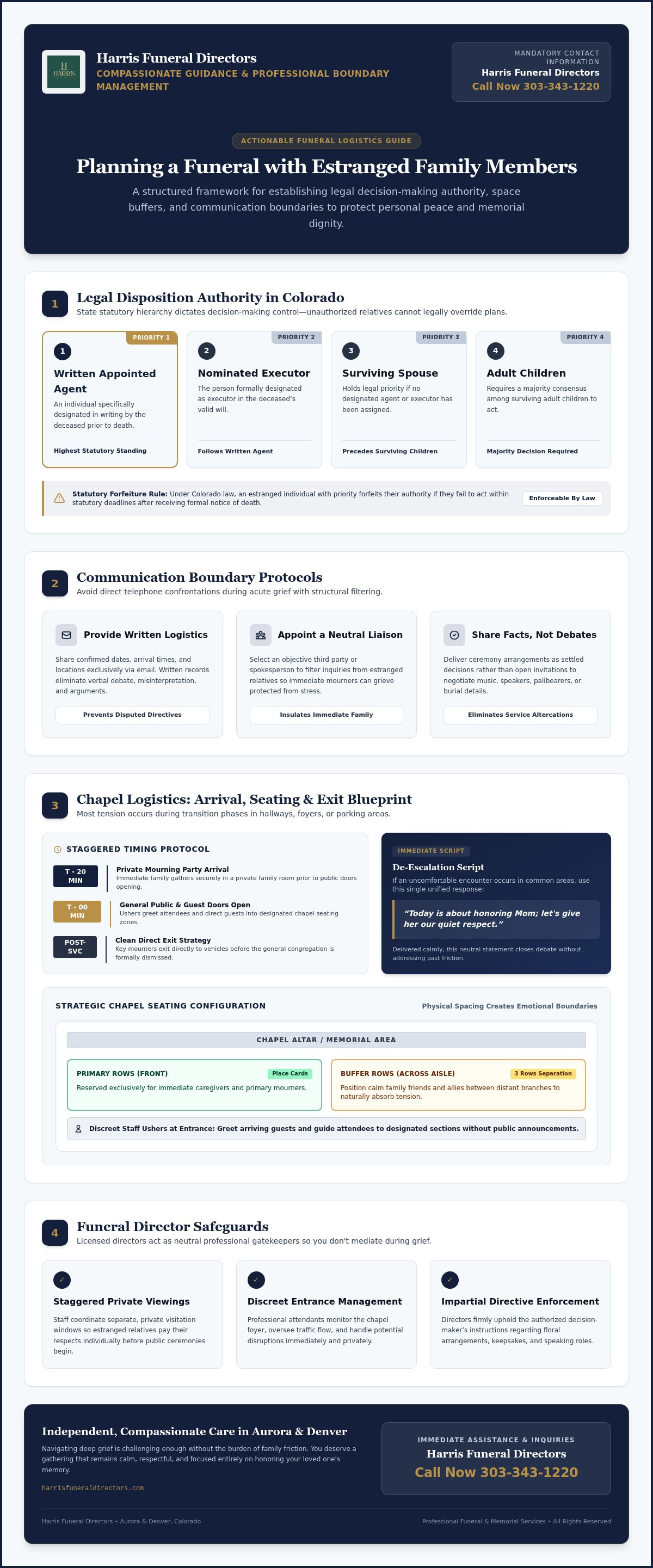
When planning a funeral with estranged family members, legal clarity must come before social coordination. In Colorado, the right of final disposition follows a strict statutory hierarchy under state law. Authority begins with an agent appointed in writing, followed by a nominated executor, a surviving spouse, and a majority of surviving adult children. Estranged relatives cannot legally override arrangements unless they hold this statutory priority. State statutes also protect families when relatives refuse to participate; an estranged individual forfeits their priority if they fail to act within statutory deadlines after receiving notice of the death.
Separating legal control from social attendance prevents painful deadlocks. Designating a single family spokesperson ensures instructions remain unified. The team at Harris Funeral Directors frequently acts as a calm, impartial buffer, carrying out the directives of the authorized decision-maker while keeping the planning process shielded from family tension.
Setting Communication Protocols Before the Service
Direct phone calls during intense grief often reignite unresolved grievances. You can protect your emotional peace by putting clear communication channels in place:
- Provide written logistics: Share confirmed dates, arrival times, and locations via email. Written records prevent misunderstandings and eliminate verbal arguments.
- Appoint a neutral liaison: Select an objective third party to filter inquiries from estranged relatives so immediate mourners can grieve in peace.
- Share facts, not debates: Deliver ceremony details as settled decisions rather than invitations to negotiate music, speakers, or burial preferences.
Designing Service Logistics: Seating, Arrival, and Buffer Strategies
Tension rarely erupts during the formal eulogy; it usually sparks in hallways, foyers, or parking areas before the service begins. Successful execution when planning a funeral with estranged family members depends on managing these transition points. Coordinate a staggered arrival schedule, allowing the primary mourning party to gather in a private family room twenty minutes before general doors open. Design a clean exit plan as well, letting key mourners step directly to their vehicles before the chapel dismisses. If an uncomfortable interaction occurs, rely on a simple script: "Today is about honoring Mom; let's give her our quiet respect."
Creating Strategic Seating and Buffer Zones in the Chapel
Physical space sets clear emotional boundaries inside the service room. Setting up distinct zones keeps distant branches apart without drawing unwanted attention:
- Reserve primary rows: Dedicate the front rows strictly to immediate caregivers and close companions, marked with simple printed place cards.
- Place trusted allies in between: Seat estranged relatives across the center aisle or three rows back, positioning calm family friends as natural physical buffers.
- Direct staff ushers: Professional funeral attendants can greet arriving guests at the door and discreetly guide attendees to their designated sections, removing any guesswork.
If you anticipate friction, the team at Harris Funeral Directors can coordinate these seating plans and private arrival windows to keep your gathering dignified and peaceful.
Partnering with Your Funeral Director as a Neutral Professional Advocate
You don't have to carry the emotional burden of managing family friction alone. An experienced funeral director acts as a steady, objective ally whose purpose is protecting the dignity of your service. When planning a funeral with estranged family members, schedule a private conversation with the director during your initial arrangement meeting. Share the relevant relational history openly. Identify individuals who might spark tension, and explain what boundaries you need established.
Once informed, staff members take over the role of professional gatekeepers. They discreetly supervise entryways, manage visitor flow, and monitor gathering spaces. This practical buffer lets you step back from defending boundaries and allows you to focus completely on personal remembrance.
How Funeral Directors Mediate Tensions and Enforce Service Boundaries
Experienced providers implement quiet structural safeguards to ensure safety and dignity:
- Staggered private viewings: Staff can schedule separate visitation times, giving estranged relatives an opportunity to say goodbye privately before public services begin.
- Discreet entrance management: Attendants greet visitors at the chapel entrance, keeping watchful eyes on room dynamics and addressing disruptive behavior immediately.
- Impartial enforcement: When disputes arise over flowers, keepsakes, or service participation, directors step forward to uphold the authorized decision-maker's instructions without bias.
You can coordinate peaceful memorial ceremonies with Harris Funeral Directors for compassionate local support when delicate family dynamics require an experienced hand.
Creating a Peaceful Space for Remembrance
Navigating deep grief is challenging enough without the added weight of old family friction. Successfully planning a funeral with estranged family members comes down to clear legal authority, staggered arrival times, and thoughtful seating buffers. You don't have to carry the burden of mediation while mourning. Leaning on experienced funeral directors gives you the space to step back and let professionals manage delicate dynamics.
As an independent, family-owned funeral home serving Aurora and Denver, we provide personalized, dignified support to protect your boundaries. You deserve a gathering that remains calm, respectful, and focused entirely on honoring your loved one's memory.
Harris Funeral Directors
Call Now 303-343-1220
Frequently Asked Questions
Can an estranged family member legally stop or alter funeral arrangements?
No, an estranged family member cannot legally alter or halt arrangements unless state law grants them superior authority as legal next of kin. When planning a funeral with estranged family members in Denver or Aurora, providers follow the directives of the authorized representative. Without higher legal priority or an active court injunction, distant relatives cannot change burial selections, cremation instructions, or ceremony details.
How do you handle funeral invitations and announcements when family is estranged?
Handle announcements by sharing concise, written details via email rather than opening phone conversations. State the confirmed service dates and location as finalized facts. If you want to protect close mourners in Lakewood or Arvada from unannounced visitors, consider delaying the public obituary notice until after the memorial takes place. This approach keeps everyone informed without inviting debates over ceremony specifics.
Can an estranged relative be excluded from attending a public funeral service?
Yes, you can exclude estranged relatives by holding a private memorial rather than a publicized gathering. While services announced openly in newspapers are accessible to the general public, ceremonies held in private chapel facilities give contracting families legal authority over attendance. When planning a funeral with estranged family members in Aurora or Commerce City, designating the event as private allows staff to enforce guest lists respectfully.
What should you do if an estranged relative causes a scene at the memorial?
Step back and allow the funeral staff to manage the situation immediately rather than engaging in an argument. Experienced attendants are trained in gentle de-escalation and can discreetly escort disruptive individuals away from the chapel to a private lounge. Keeping your focus on supportive companions allows the professionals to restore order quickly and preserve the solemnity of your loved one's ceremony.


