

Harris Funeral Directors
Call Now 303-343-1220
What to Do With a Loved One’s Belongings: A Gentle Guide
What if you didn’t have to decide what to keep, give away, or let go of all at once? When you’re grieving, even ordinary belongings can hold powerful memories, and family members may feel differently about what should happen to them. It’s understandable if the practical task feels too heavy to begin.
When you’re considering what to do with a loved one's belongings, start with one small, manageable step. This guide offers a practical way to sort meaningful possessions, handle essential items, and navigate differing family views without rushing. You can make progress while giving yourself permission to move at a pace that feels right for you.
Handling a Loved One's Belongings When Everything Matters
A familiar sweater, a favorite mug, or a stack of handwritten notes can bring someone close again for a moment. Belongings hold more than practical use. They can carry memories, reflect a person’s habits and identity, and offer everyday reminders of the life you shared. It makes sense if deciding what to keep feels tender or difficult.
There’s no single right pace for sorting. You don’t have to feel completely ready, and you don’t need to make every decision in one sitting. Practical circumstances may shape when you begin, but your process can still be gradual. Pausing before a decision isn’t falling behind; it can give you room to remember and make the next choice feel more manageable.
Begin with one small, low-pressure decision
Instead of taking on an entire home, choose one drawer, one shelf, or a short sorting session. A small area gives you a clear place to begin without making the whole task feel urgent. You might start with kitchen utensils rather than photographs if that feels gentler.
Before sorting, set out temporary groups: items to keep, items to offer to family, items to donate or discard, and items you’re unsure about. Put uncertain belongings in a separate box or designated area. Label the box and revisit it later, without treating the pause as a final decision.
Set aside important papers, keys, medications, and other items that need special attention instead of mixing them with household goods. Take a break if a memory catches you off guard or it becomes hard to focus. Have a cup of tea, step outside, or stop for the day. There’s no need to push through distress to prove you’re making progress. Starting with one manageable choice can help you honor what matters while leaving room for more decisions when you’re ready.
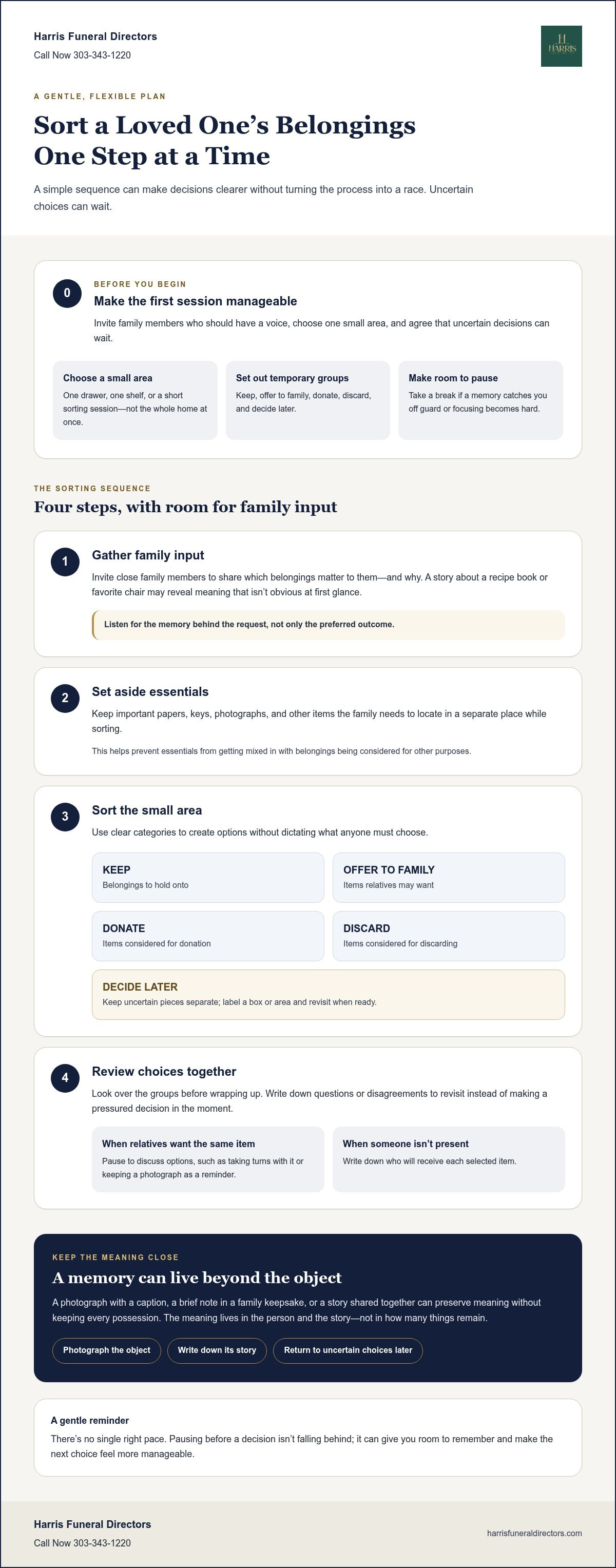
How to Sort a Loved One’s Belongings: A Gentle Step-by-Step Plan
A simple sequence can make decisions clearer without turning the process into a race. Before beginning, invite the family members who should have a voice, choose a small area, and agree that uncertain choices can wait. Treat this plan as a flexible guide, not a set of rules.
- Gather family input. Invite close family members to share which belongings matter to them and why. A story about a well-used recipe book or a favorite chair may reveal meaning that isn’t obvious at first glance.
- Set aside essentials. Keep important papers, keys, photographs, and other items the family needs to locate in a separate place while sorting. This helps prevent them from getting mixed in with belongings being considered for other purposes.
- Sort a small area. Use clear categories: keep, offer to family, donate, discard, and decide later. A category creates options without dictating what a family must choose.
- Review the choices. Before wrapping up, look over the groups together. Write down questions or disagreements to revisit rather than making a pressured decision in the moment.
Make room for keepsakes, shared decisions, and uncertainty
Let each person name the items they hope to keep and share the memory behind the request. If several relatives care about the same object, pause to discuss options, such as taking turns with it or keeping a photograph as a reminder. Write down who will receive each selected item, especially when belongings are being set aside for family members who aren’t present. Keep undecided pieces separate and return to them when everyone feels ready.
If funeral arrangements are also on your family’s mind, Harris Funeral Directors’ funeral care can support your family while you make these personal decisions.
Preserve the Memories, Share Decisions, and Seek Support in Aurora
Sorting isn’t the only way to honor someone’s life. A photograph of a well-loved object, a caption with the story behind it, or a brief note in a family keepsake can preserve a memory without requiring you to keep every possession. The meaning lives in the person and the story, not in how many things remain.
Keep the person’s story present without keeping everything
Choose a few items that feel especially connected to your loved one, and consider recording why they matter. A recipe card might remind you of Sunday dinners; a gardening tool might bring to mind a shared afternoon. These details can help family members remember together, even if the original item later moves to someone else.
Different relatives may feel attached to the same belongings, or may be ready for different choices. That doesn’t mean anyone is honoring the person less. Try asking:
- “What memory comes to mind when you see this?”
- “Would a photograph or a written note help preserve its meaning for you?”
- “Could we take time to think about this before deciding?”
Listen for the feeling beneath each request, not just the preferred outcome. A calm conversation can reveal that one person wants the object itself, while another most wants the story attached to it. You don’t have to settle every difference in one discussion.
Harris Funeral Directors serves families in Aurora and nearby Denver, Commerce City, Arvada, Thornton, and Lakewood. If your family is arranging funeral care, Harris Funeral Directors provides personalized support with those arrangements. Give yourself room to remember, talk, and make personal decisions in a way that feels respectful to your family.
Take the Next Step at Your Own Pace
There’s no perfect way to decide what to do with a loved one's belongings. Let your next step be one that feels kind to you and respectful of your family’s needs. Memories can stay close through stories, photographs, and the objects you choose to keep, even as other belongings find a new place.
If funeral arrangements are also part of this time, Harris Funeral Directors is a family-owned and operated funeral home serving Aurora and nearby Colorado communities. The team offers personalized funeral, cremation, and pre-planning care, shaped around each family.
Give yourself permission to take this one step at a time. The care you bring to each decision can honor your loved one without asking you to have everything figured out today.
Frequently Asked Questions
Is there a right time to sort through a loved one’s belongings?
There isn’t one right time. You can begin when it feels manageable, or wait while you attend to immediate needs. If practical circumstances make some decisions necessary, separate those from choices that can wait. Focus first on what truly needs attention now, and leave more personal decisions for a later conversation.
What should I do with a loved one’s prescription medications?
Keep medications secure and don’t take or share them. For safe disposal instructions, contact a pharmacist or your local medication take-back program. Don’t flush medicines or pour them down a drain unless a qualified source specifically advises it. If you’re unsure what a container holds, keep it separate until you can get guidance.
How can I preserve digital photos and messages after someone dies?
Preserve copies of important photos and messages in a place you can access, such as a personal computer or an external storage device. If accounts are accessible to you, use their available download or export tools, and keep a second backup. Avoid guessing passwords or bypassing account protections. A short note with dates, names, or context can help family members understand what they’re viewing.
Harris Funeral Directors
Call Now 303-343-1220


