

What if the most meaningful way to honor your loved one isn't keeping them on a shelf, but returning them to the wild beauty of the Front Range? Many families feel a heavy sense of indecision after a loss, worried about accidentally breaking local environmental laws or simply feeling stuck with an urn at home. It's natural to want a tribute that truly reflects a unique personality while staying within legal boundaries. This guide will help you understand what to do with ashes after cremation Colorado, ensuring you have the clarity you need during a difficult time. You'll discover the specific paperwork required for scattering in the Rockies, beautiful local spots near Aurora, and creative memorial options that go beyond tradition. We'll walk through the practical steps together so you can focus on the legacy that matters most.
Colorado Laws for Scattering and Keeping Cremated Remains
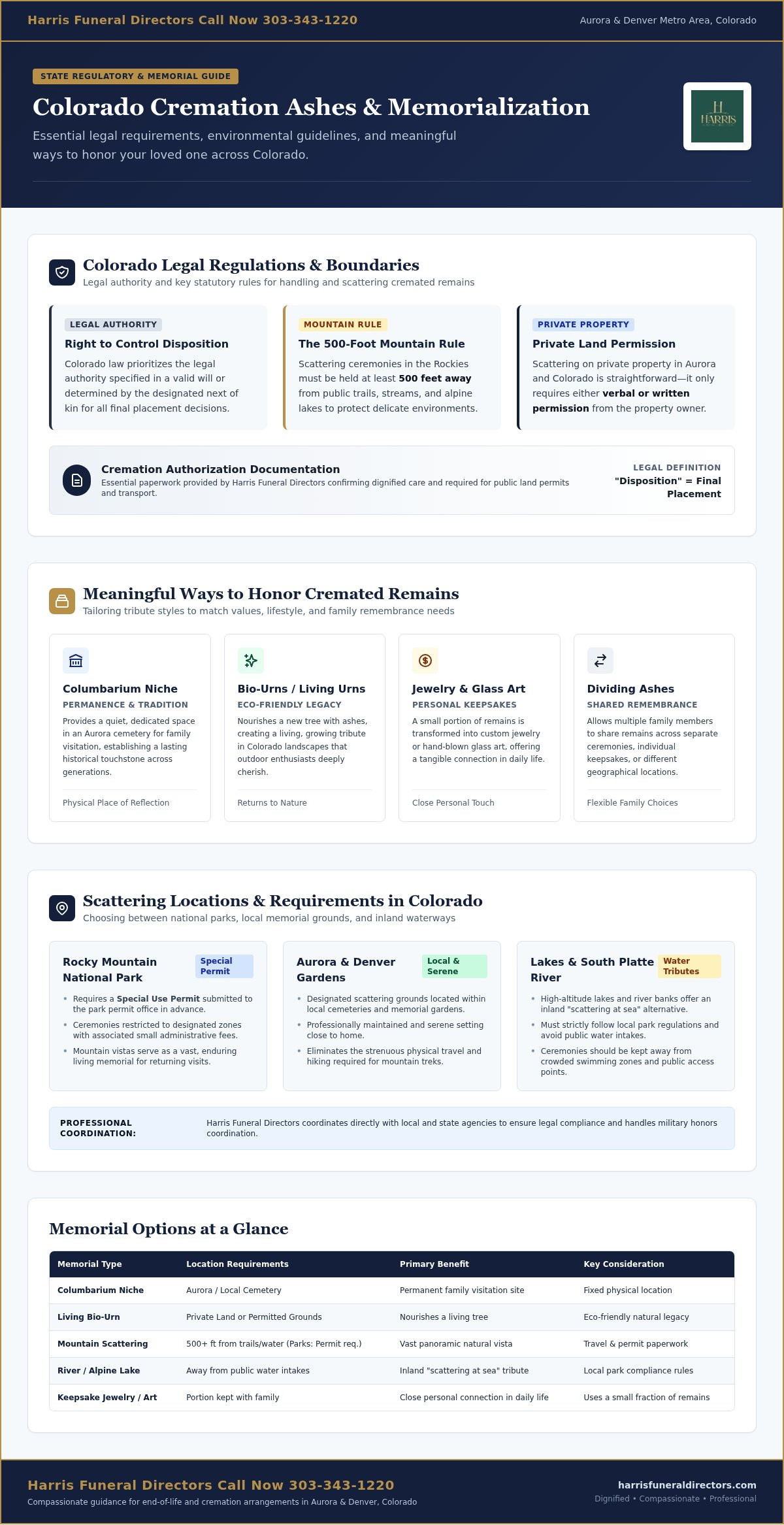
Deciding what to do with ashes after cremation Colorado involves understanding a few gentle legal boundaries. Colorado law prioritizes the "Right to Control Disposition," which designates exactly who has the legal authority to make final arrangements. This framework usually follows the instructions left in a will or the decisions made by the next of kin. Having these clear rules provides a sense of order and peace for families during an emotional time.
Scattering on private land is often the simplest path for many families in the Aurora area. You only need the property owner's verbal or written permission to proceed. However, if you're looking toward the Rockies, the "500-foot rule" helps protect the delicate mountain landscape. This means keeping ceremonies at least 500 feet away from public trails and water sources like streams or alpine lakes. These guidelines ensure your private moment stays truly personal while respecting the environment.
Permits and Paperwork for Public Lands
If you choose a National Park for a final resting place, you must apply for a Special Use Permit. Each park has its own designated zones and small fees to manage these requests. Under Colorado health and safety codes, "disposition" refers to the final legally recognized placement or disposal of cremated remains.
Our team at Harris Funeral Directors handles the essential paperwork so you can focus on your family. The Cremation Authorization form we provide is a key piece of documentation. It proves the process was handled with dignity and is often required for permits or when transporting remains. We're here to be your advocate, ensuring every step is respectful and legally sound.
A Roundup of Meaningful Ways to Honor Ashes
Deciding what to do with ashes after cremation Colorado is a deeply personal journey that reflects the unique life being honored. For many families in our community, a local Aurora columbarium offers a sense of permanence and a quiet, dedicated space for visitation. This traditional choice provides a physical touchstone for grief, ensuring that future generations have a specific place to pay their respects and connect with their family history.
Colorado's outdoor enthusiasts often gravitate toward eco-friendly tributes that give back to the earth. Bio-urns or "Living Urns" allow a loved one to nourish a new tree, creating a growing legacy in the landscapes they cherished during their lifetime. If you prefer something more personal and portable, you might consider transforming a small portion of the remains into memorial jewelry or hand-blown glass art. These keepsakes provide a tangible way to keep a loved one close during your daily life. You can explore these options further in our guide to cremation services aurora colorado.
Choosing the Right Memorial for Your Family's Needs
When selecting a memorial, it helps to compare the permanence of a cemetery niche with the portability of scattering. Some families find comfort in dividing the ashes; this allows multiple relatives to share in the remembrance through individual keepsakes or separate ceremonies in different locations. A common concern about scattering in the mountains is the fear of losing a "place to visit." However, many find that the entire vista becomes a living memorial. You can return to a favorite trailhead or mountain overlook whenever you need to feel connected. If you feel overwhelmed by these choices, Harris Funeral Directors can help you find a path that feels right for your family.
Best Local Locations for Scattering Ashes in Colorado
Finding the perfect setting is a vital part of deciding what to do with ashes after cremation Colorado. Rocky Mountain National Park is a frequent choice for a mountain farewell, though it requires a specific Special Use Permit application submitted to the park's permit office well in advance. For families who prefer to stay closer to home, Aurora and Denver offer serene memorial gardens and designated scattering areas within local cemeteries. These spaces provide a peaceful, professionally maintained environment for reflection without the travel required for a mountain trek.
If your loved one felt a deep connection to the water, Colorado's high-altitude lakes and rivers offer a meaningful "scattering at sea" alternative. While these are inland, the same spirit of returning to nature applies. It's essential to follow local park regulations and ensure ceremonies take place away from public water intakes or crowded swimming areas. Selecting a quiet bank along the South Platte River or a secluded alpine lake can create a powerful, lasting memory for everyone in attendance.
Planning the Ceremony with Harris Funeral Directors
Planning these moments can feel overwhelming while you're grieving. Our staff acts as your steady partner, coordinating with local agencies to ensure your ceremony is both legal and dignified. We understand the landscape of funeral homes aurora co and how to navigate the logistical hurdles of public land use.
For those who served our country, we specialize in incorporating military honors for veterans during scattering ceremonies. Whether it's the folding of the flag or the playing of Taps, we ensure your loved one's service is recognized with the highest level of respect. We handle the paperwork and coordination so you can focus entirely on the legacy being celebrated. Our goal is to provide a supportive framework that leads you through these complex decisions without adding to your burden.
Honoring Your Loved One with Confidence
Deciding what to do with ashes after cremation Colorado doesn't have to be stressful. By understanding permit processes and exploring options like bio-urns or local columbariums, you can create an authentic tribute. Our family-owned firm brings compassion and expertise in Colorado burial laws to every arrangement. We offer affordable local packages that prioritize dignity while removing the logistical weight from your shoulders. Whether you're planning a mountain farewell or a quiet Aurora gathering, you're never alone in this journey.
We're here to help you find a path that brings peace to your family and honors a life well-lived.
Frequently Asked Questions
Is it legal to scatter ashes in the Rocky Mountains?
Yes, scattering is legal, but the rules vary depending on the specific location. National Parks require a Special Use Permit and a small fee. On most other public lands, you must remain at least 500 feet from trails and water sources. Harris Funeral Directors can guide you through these requirements so you know exactly what to do with ashes after cremation Colorado for a mountain tribute.
Do I need a permit to scatter ashes on my own property in Colorado?
You don't need a permit to scatter ashes on land you own. Colorado law respects your right to choose the final resting place for your loved one on private property. If you'd like to scatter on someone else's land in the Aurora or Denver area, you only need their verbal or written consent. This makes private land a flexible and intimate option for families.
Can I scatter ashes in a Colorado river or lake?
You can scatter ashes in Colorado's waterways if you follow state health and safety guidelines. These rules generally require you to stay 500 feet away from public water intakes and high-traffic swimming spots. Choosing a quiet, secluded bank along a river or a remote alpine lake ensures your ceremony is dignified. It also protects the natural beauty of our local Aurora and Denver water systems.


