

Harris Funeral Directors
Call Now 303-343-1220
What if the comforting phrases we instinctively reach for actually make a young person more afraid? When you are carrying your own heavy grief, explaining death to a child can feel like the most intimidating conversation you will ever face. You want nothing more than to protect their heart, and it's natural to worry that saying the wrong thing might worsen their sorrow.
Honest, gentle clarity protects grieving children far better than well-intentioned euphemisms. In this guide, you will learn how to speak honestly and gently with children about death across different developmental stages. We share practical ways to answer their hardest questions, calm guidance on attending services, and thoughtful steps to include young ones in family remembrance traditions.
Understanding How Children Process Loss Across Different Ages
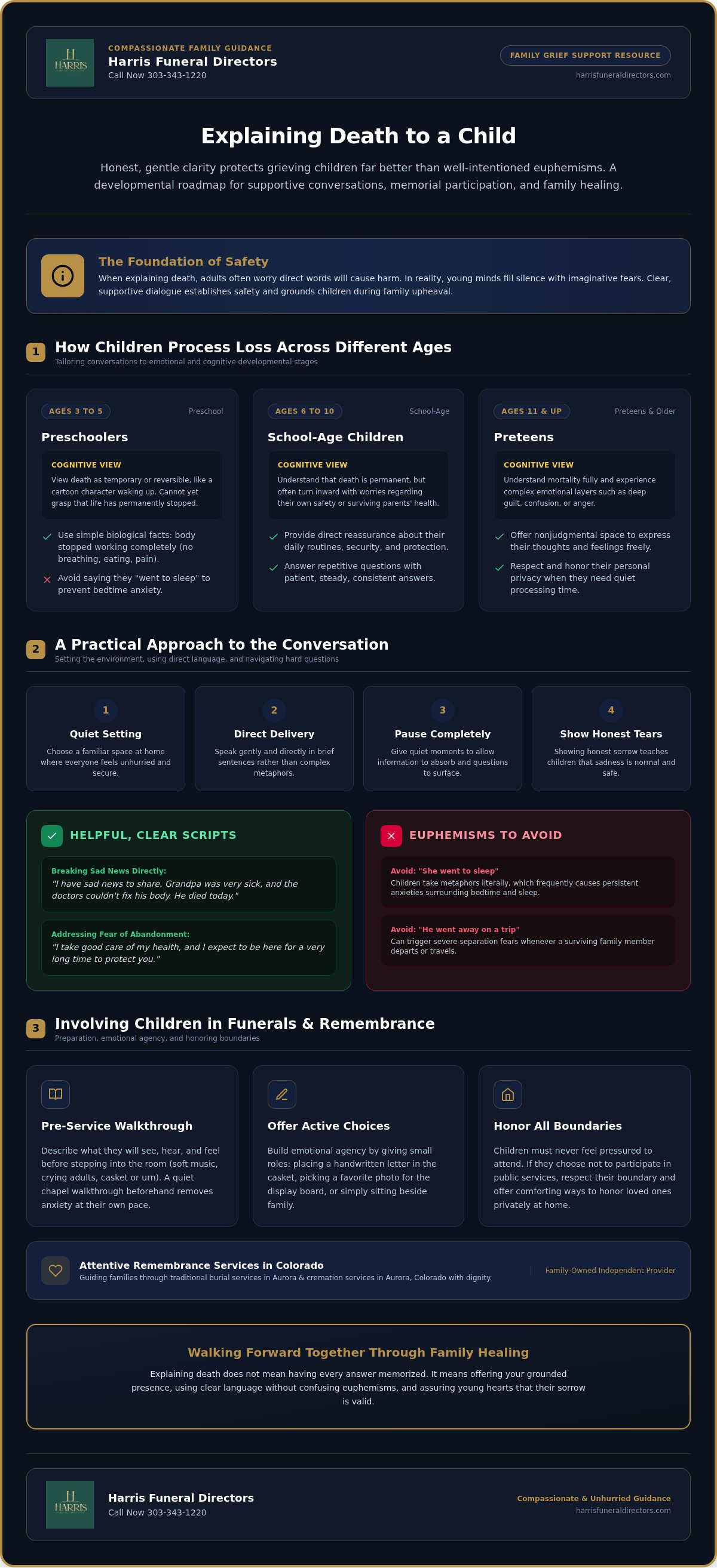
A child's reaction to loss depends heavily on their emotional and cognitive stage. When explaining death to a child, adults often worry that direct words will cause harm. In reality, young minds fill silence with imaginative fears. Clear, supportive dialogue establishes safety and grounds them during family upheaval.
Very young children view death as temporary or reversible, much like a cartoon character waking up after an injury. They cannot yet grasp that life has permanently stopped. As children grow, their awareness deepens, shifting their questions from practical realities to personal worries.
Tailoring Your Conversations from Toddlers to Preteens
Meeting young people where they are developmentally allows you to provide comfort without causing confusion. Consider these age-specific approaches:
- Preschoolers (Ages 3 to 5): Use simple biological facts. Explain that the person's body stopped working completely, so they no longer breathe, eat, or feel pain. Avoid saying they "went to sleep," which can trigger bedtime anxieties.
- School-Age Children (Ages 6 to 10): These children understand that death is permanent, but they often turn inward. They may worry about their own safety or the health of surviving parents. Reassure them directly about their daily routines and protection.
- Preteens (Ages 11 and up): Older kids understand mortality fully and may experience complex emotions like guilt or anger. Offer them nonjudgmental space to share their feelings, honoring their privacy when they need quiet time.
Every developmental transition brings fresh questions. Approaching each phase with calm honesty gives your family a shared foundation of trust.
How to Explain Death to a Child: A Practical Approach
Find a quiet, familiar space at home where your family feels safe and unhurried. When explaining death to a child, using simple scripts relieves pressure during an emotional conversation. Speak gently and directly: "I have sad news to share. Grandpa was very sick, and the doctors couldn't fix his body. He died today."
Avoid softening the truth with phrases like "he went away" or "she went to sleep." Children take metaphors literally, which can create lasting anxiety around traveling or bedtime. Deliver the truth in brief sentences, then pause completely. Giving them quiet moments allows them to absorb the information and ask spontaneous questions.
Answering Difficult Questions and Navigating Common Reactions
Young minds process permanence slowly, which means your child may ask the same questions repeatedly over several days. Offer the same steady, patient answers each time. When they ask whether you might die too, address their fear of abandonment directly. You can say, "I take good care of my health, and I expect to be here for a very long time to protect you."
Don't hide your own tears during these moments. Showing honest sorrow teaches children that sadness is normal and safe to express. If you feel emotionally drained while coordinating services, leaning on compassionate family support can offer the steady foundation you need to care for your young ones.
Involving Children in Funerals, Memorials, and Family Remembrance
Ceremonies offer a profound sense of closure, yet children should never feel pressured into attending. Part of explaining death to a child involves walking them through the memorial process so they know what to expect. Describe what they will see, hear, and feel before stepping into the room. Let them know that adults might be crying, soft music might be playing, and a casket or memorial urn will be present.
Giving young people active choices builds emotional agency during a disorienting time. Ask if they would like to help in small, personalized ways: placing a handwritten letter in the casket, picking a favorite photograph for a display board, or simply sitting beside you. If they choose not to attend, respect that boundary without hesitation, offering comforting ways to honor their loved one privately at home.
Preparing for Services with Compassionate Local Support
A quiet walkthrough before public ceremonies begin can remove much of the anxiety young people experience. Touring the chapel gives children space to see the environment, ask honest questions, and adjust to the solemn atmosphere at their own pace.
Compassionate funeral professionals understand how to guide families through these sensitive moments with warmth and dignity. Whether you are arranging traditional burial services in Aurora or meaningful cremation services in Aurora, Colorado, attentive support ensures your children feel included, protected, and deeply cared for throughout the entire remembrance journey.
Walking Forward Together Through Family Healing
Navigating grief alongside your household requires immense tenderness, especially when emotions feel overwhelming. Successfully explaining death to a child doesn't mean having every answer memorized. It means offering your grounded presence, using clear language without confusing euphemisms, and assuring young hearts that their sorrow is valid. By meeting their questions with steady love, you establish a secure foundation for healing.
As a family-owned independent provider serving local Colorado families, our dedicated staff offers compassionate, unhurried guidance through every stage of remembrance. We are here to help you honor your loved one while gently supporting the young minds who need your steady care most. You don't have to walk this journey alone.
Harris Funeral Directors
Call Now 303-343-1220
Frequently Asked Questions
Should young children attend a funeral or memorial service?
Children can attend services if they feel comfortable and have been prepared in advance, but they should never be forced. When explaining death to a child, describe what will happen during the gathering and give them the final choice. For families in Aurora and the greater Denver area, an unhurried visit beforehand helps little ones decide with confidence.
Why is it harmful to tell a child that someone went to sleep?
Comparing death to sleep creates unnecessary confusion because young children interpret words literally. A child may develop an intense fear of bedtime, worrying that they or their parents will never wake up. Successfully explaining death to a child requires honest language, clarifying that the body stopped working completely. Clear honesty reassures them that normal sleep is safe.
How do I handle sudden outbursts of play or laughter after sharing sad news?
Treat spontaneous laughter or returning to play as a healthy, protective response rather than a lack of empathy. Young minds can only process heavy sorrow in small, manageable doses. Switching back to familiar games helps their nervous system recalibrate. Allow them to play freely without correction, remaining quietly nearby for when they are ready to talk again.
What should I do if my child asks if I am going to die too?
Answer with calm honesty while firmly addressing their fear of abandonment. You can tell them that while everyone dies someday, you take great care of your body and plan to be here for a very long time. Reassure them about who provides their daily care, which restores stability and eases their immediate anxiety.


