

Harris Funeral Directors
Call Now 303-343-1220
What if a missing will doesn’t have to leave funeral plans at a standstill? Funeral planning when there is no will can raise difficult questions about who should make arrangements, where to find your loved one’s preferences, and how to handle costs while estate matters remain unclear. It’s understandable to wonder whether anything can move forward before probate is settled. Families can often begin discussing practical arrangements while seeking guidance on legal and financial questions.
This guide covers information you can gather, questions that call for current Colorado legal guidance, and ways to communicate with family as you make decisions. You’ll also learn how a funeral director can help you consider burial or cremation and plan a respectful memorial that reflects your loved one.
Funeral Planning When There Is No Will: What Families Can Begin
The days after a death can bring grief alongside urgent questions. Even without a will, family members can start gathering information and talking through possible arrangements. These early conversations can help everyone understand what is known, what remains uncertain, and which decisions need careful guidance.
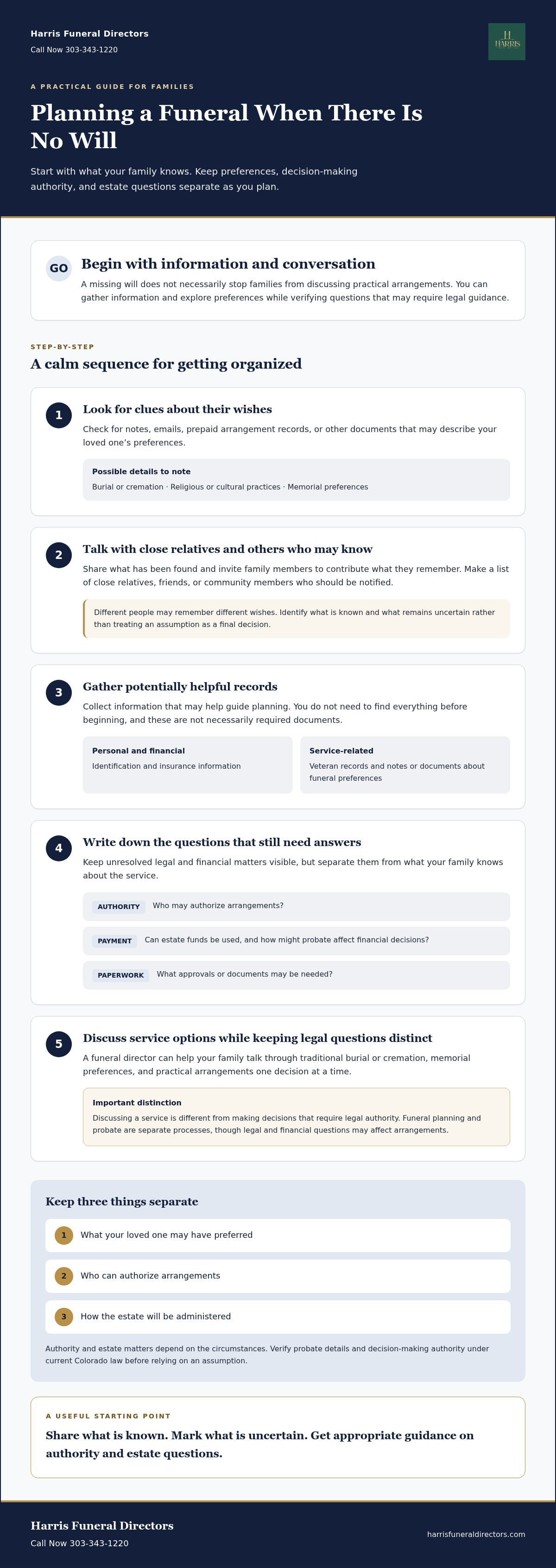
Begin with practical steps that don’t assume anyone has legal authority to make a final decision:
- Look for notes, emails, prepaid arrangement records, or other documents that may describe your loved one’s wishes.
- Talk with close relatives about burial or cremation, memorial preferences, and who may have relevant information.
- Write down questions about approvals, paperwork, and payment so the family can address them clearly.
Keep three issues distinct: what your loved one may have preferred, who can authorize arrangements, and how the estate will be administered. A will may offer useful guidance about funeral or memorial preferences, but its presence or absence doesn’t, by itself, answer every question about who can act. Authority and estate matters depend on the circumstances and current Colorado rules, so get appropriate legal guidance before relying on an assumption.
Does the absence of a will stop funeral arrangements?
Not necessarily. Families can begin practical conversations and explore options, but discussing a service is different from making decisions that require legal authority. Funeral planning and probate are separate processes, though legal and financial questions may affect arrangements. Verify probate details and decision-making authority under current Colorado law.
A funeral director can help your family discuss burial or cremation and memorial preferences while keeping unresolved legal questions separate. Taking one step at a time can support practical progress and respectful family communication.
A Practical Colorado Checklist for Planning Without a Will
When emotions are raw, a shared list can make the next steps feel more manageable. Start with a family conversation, gather any known preferences, and write down questions before committing to arrangements. This gives relatives a chance to share what they know and helps separate confirmed wishes from assumptions.
Which details should the family gather first?
Collect information that may help guide planning. You don’t need to find everything before beginning, and these items aren’t a list of required paperwork.
- Preferences: Note any known wishes about burial or cremation, religious or cultural practices, and the kind of memorial your loved one may have wanted.
- People to notify: Make a list of close relatives, friends, or community members who should hear the news.
- Potentially helpful records: Look for identification, insurance information, veteran records, and notes or documents about funeral preferences.
- Questions to resolve: Record questions about who may authorize arrangements, whether estate funds can be used, and how probate may affect financial decisions.
Keep the conversation respectful. Family members may remember different wishes or have different views about the service. Share what’s known, identify what’s uncertain, and avoid treating an assumption as a final decision. Check questions about legal authority, estate funds, and probate against current Colorado guidance.
If insurance may be part of the financial picture, this life insurance funeral expenses guide offers additional context. A funeral director can also help you discuss arrangements with care. When you’re ready, speak with Harris Funeral Directors about the next steps.
How Harris Funeral Directors Can Help Aurora Families Take the Next Step
Planning a service without clear written instructions can feel like a lot to carry. Harris Funeral Directors can help your family talk through traditional burial or cremation, consider memorial preferences, and organize practical arrangements one decision at a time. You don’t need to have every answer ready before beginning a conversation.
What to expect when discussing arrangements
Bring the information your family has gathered, including any known wishes and questions. The conversation can help clarify which service format feels fitting, what details still need family discussion, and what practical steps lie ahead. If traditional burial is under consideration, the traditional burial guide can help you understand that option.
Funeral planning when there is no will may also raise questions about who can authorize arrangements, estate funds, or probate. A funeral director can help organize the service conversation, but those legal questions shouldn’t be treated as definitive legal advice. Procedures and authority can depend on the circumstances, so seek current Colorado legal guidance before relying on an assumption.
Harris Funeral Directors is a family-owned funeral home serving Aurora and nearby communities, including Denver, Commerce City, Arvada, Thornton, and Lakewood. When you’re ready, speak with Harris Funeral Directors about arranging a respectful service and taking the next step with care.
Take the Next Step With Care
Funeral planning when there is no will can raise separate questions about your loved one’s preferences, who may make arrangements, and how the estate will be handled. Begin by gathering the information your family has and sharing questions openly. Harris Funeral Directors can help you discuss traditional burial or cremation and plan a meaningful service, while legal or probate questions should be checked with a qualified source familiar with current Colorado guidance.
Harris Funeral Directors is a family-owned funeral home serving Aurora and surrounding Colorado communities, including Denver, Commerce City, Arvada, Thornton, and Lakewood. The funeral home offers traditional burial, cremation, and personalized care. You don’t have to resolve every uncertainty before taking a thoughtful next step.
Move at a pace that feels right for your family. A respectful tribute can begin with one calm conversation.
Frequently Asked Questions
Can you plan a funeral when there is no will?
Yes. Families can begin gathering information and discussing service preferences even if no will is found. Funeral planning when there is no will can include considering burial or cremation, noting known religious or personal wishes, and identifying questions that need answers. Before making decisions that require legal authority, clarify who can act under current Colorado rules.
What happens if someone dies without a will in Colorado?
If someone dies without a will, Colorado law governs how probate assets are handled, but the outcome depends on the person’s circumstances and surviving relatives. Some assets may be handled outside probate based on beneficiary designations or ownership arrangements. Because details can vary, seek current Colorado legal guidance about estate administration rather than assuming how property will be distributed.
Who can make funeral arrangements if there is no will?
Don’t assume that a particular relative has authority solely because of their relationship to the person who died. The answer may depend on the circumstances and current Colorado rules. Family members can still share known preferences and discuss possible arrangements, but confirm who can authorize decisions before treating a planning conversation as final approval.
Harris Funeral Directors
Call Now 303-343-1220


