

Harris Funeral Directors
Call Now 303-343-1220
What if supporting a grieving friend is less about finding perfect words and more about showing up, again and again? If you’re worried about saying something hurtful or awkward, that uncertainty is understandable. Learning how to support a grieving friend doesn’t mean taking away their pain. It means meeting them with care and without judgment.
A quiet willingness to listen may matter more than advice. Practical help can be easier to accept when you offer something specific, while still respecting what your friend wants. You don’t have to fix the loss or know exactly what to say.
This guide shares gentle words you can use, thoughtful ways to help, and simple ways to stay present over time. Grief has no set schedule, but your steady care can remind your friend they don’t have to face it alone.
Families in Aurora, Denver, Commerce City, Arvada, Thornton, and Lakewood may also be managing funeral arrangements while grieving. A friend can help by listening, offering a specific task, or simply giving the family space to decide what support feels right.
Support a Grieving Friend Without Trying to Fix Their Grief
Grief is personal. Your friend may feel sadness, anger, relief, confusion, or several emotions at once, and those feelings can change from day to day. There’s no reliable timeline for grief, and comparing their response with someone else’s can leave them feeling misunderstood. Avoid assuming you know what they need or how they should feel.
At its heart, learning how to support a grieving friend means listening, acknowledging the loss, and offering dependable presence. You don’t need to make the pain disappear. A steady, caring friend can help someone feel less alone while they move through grief in their own way.
What can I say when I do not know what to say?
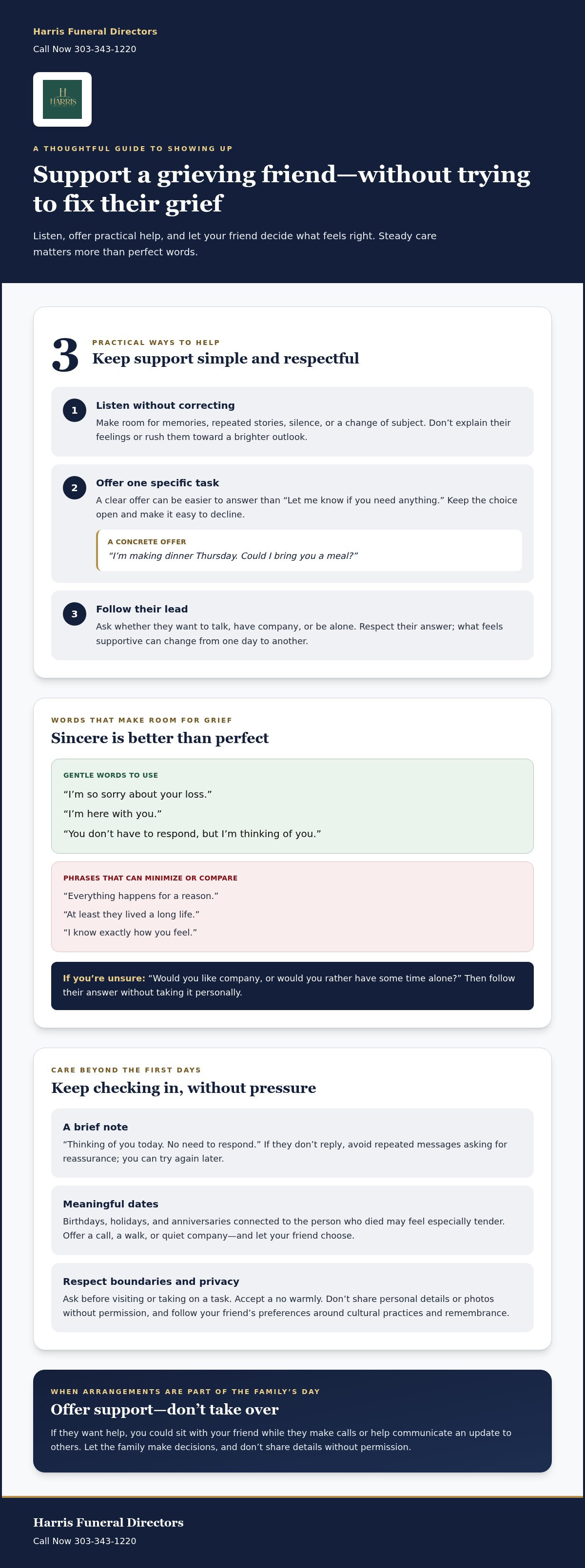
Simple, sincere words can be enough. Try, “I’m so sorry about your loss,” “I’m here with you,” or “You don’t have to respond, but I’m thinking of you.” These statements recognize what happened without asking your friend to comfort you or explain how they feel.
Be gentle with phrases that minimize the loss or try to find a bright side. “Everything happens for a reason,” “At least they lived a long life,” and “I know exactly how you feel” can sound like comparisons or explanations, even when offered with kindness. Avoid promising that everything will soon feel better, too. You can’t know how grief will unfold.
Listen without rushing to fill every silence. If your friend wants to talk, let them choose what to share. If they become quiet, you can sit beside them or say, “I’m here. We don’t have to talk.” Advice and solutions may not be what they need in that moment. A calm, nonjudgmental presence can show that their feelings are welcome, just as they are.
If you’re unsure whether to talk, sit quietly, or give them space, ask: “Would you like company, or would you rather have some time alone?” Then follow their answer without taking it personally.
Practical Ways to Support a Grieving Friend
Knowing how to support a grieving friend can become easier when you focus on small, respectful actions rather than trying to find a perfect solution. Let your friend’s needs guide you, and remember that what helps one person may not feel right to another.
- Listen without correcting. Give your friend room to share memories, repeat themselves, or change the subject. Resist the urge to explain their feelings or steer the conversation toward a brighter outlook.
- Offer one specific task. A clear offer can feel easier to respond to than “Let me know if you need anything.” You might say, “I’m making dinner Thursday. Could I bring you a meal?” or “Would it help if I picked up groceries?”
- Follow their lead. Ask what feels supportive, then respect the answer. They may want to talk, welcome company, or prefer quiet. Their needs can also change, so take your cues from them each time.
Specific offers make it easier to accept help than a general offer. Keep the choice open, though. Try, “I can drop off dinner, or help with an errand if that would be better. No pressure if neither works.” This gives your friend a practical option and room to decline or suggest something else.
When funeral arrangements are part of what the family is handling, you could offer to sit with your friend while they make calls or help communicate an update to others, if they want that. Don’t take over decisions or share details without permission.
How do I offer help without intruding?
Ask before visiting or taking on a task. “Would you like company, or would quiet feel better today?” lets your friend choose without needing to explain. Accept a no warmly, without taking it personally. Protect their privacy, and don’t share personal details or photos without permission. Cultural practices and ways of remembering a loved one differ, so follow your friend’s preferences rather than assuming what remembrance should look like.
For families in Aurora and nearby communities who are arranging funeral or cremation services, Harris Funeral Directors offers traditional burial, cremation, and pre-planning services.
How to Keep Supporting a Grieving Friend in the Weeks and Months Ahead
After the first messages and visits, your friend may still be adjusting to a changed daily life. Part of how to support a grieving friend is to check in occasionally, without expecting a reply. A brief note such as “Thinking of you today. No need to respond” can let them know your care hasn’t faded.
Birthdays, holidays, and anniversaries connected to the person who died may feel especially tender. Reach out gently around those dates and offer a call, a walk, or quiet company. Let your friend decide whether they’d like to accept. Remembering a meaningful day can show care without asking them to explain how they feel.
Make your offers manageable and clear. Instead of asking your friend to plan a visit, you could suggest a short walk or offer to stop by briefly. If they decline, let them know there’s no pressure and follow up another time.
How can I check in while respecting boundaries?
Keep messages brief and let your friend set the pace. If they don’t respond, avoid repeated messages that ask for reassurance. You can try again later with a simple note. If grief feels overwhelming or daily life seems difficult to manage, how to support a grieving friend may include gently suggesting a grief counselor or support group. Offer the idea without diagnosing them or applying pressure.
Steady care can be as simple as reaching out and allowing your friend to choose what feels manageable. Families looking for funeral and cremation services in Aurora, Denver, Commerce City, Arvada, Thornton, or Lakewood can learn more at Harris Funeral Directors.
Keep Showing Up With Care
Learning how to support a grieving friend isn’t about finding words that make grief disappear. It’s about listening without judgment, offering practical help in a way that respects their wishes, and staying present beyond the first days. A brief, no-pressure check-in or a thoughtful note on a significant day can let your friend know they haven’t been forgotten.
Each person grieves differently. Let your friend set the pace, and remember that quiet, consistent care can matter even when you can’t see its impact. Harris Funeral Directors is a family-owned and operated funeral home offering compassionate, personalized care to families in Aurora and nearby communities.
Your steady presence is enough to begin. Keep showing up with kindness, one moment at a time.
Frequently Asked Questions
Is it better to talk about the person who died or avoid bringing them up?
A gentle mention can reassure your friend that the person who died is remembered, but people have different preferences. Follow your friend’s cues, and use the person’s name if it feels appropriate in your relationship. Give them room to respond, share a memory, or change the subject. Silence isn’t always more considerate; a warm, respectful mention may be welcome.
What should I avoid saying to someone who is grieving?
Avoid comparisons, minimizing phrases, unsolicited explanations, and pressure to feel better by a certain time. Comments meant to comfort can unintentionally dismiss a person’s individual experience, even when your intentions are kind. There’s no perfect phrase for every person or relationship. A simple acknowledgment, such as “I’m sorry,” followed by attentive listening, is often a gentler place to begin.
How can I help a grieving friend who says they do not need anything?
Respect their answer, then consider making one specific, low-pressure offer they can accept or decline. For example, you might ask, “Would it help if I dropped off a meal?” or “Could I pick something up for you?” Don’t assume those tasks are welcome. If they decline, accept that kindly and check in gently another time.
Harris Funeral Directors
Call Now 303-343-1220


