

Losing a loved one is heavy enough without the crushing weight of wondering how you will pay for a final goodbye. You might feel a sense of panic when looking at funeral costs, or perhaps you worry that a lack of funds means your family member won't receive the respect they deserve. It's a common fear in our Denver and Aurora communities, but financial hardship shouldn't stand in the way of a peaceful legacy.
If your loved one was receiving Health First Colorado benefits at the time of their passing, you likely qualify for Medicaid Cremation and Burial Assistance. We understand that government paperwork feels overwhelming during a time of grief; however, these programs exist to ensure every neighbor is treated with care. This guide will clarify the current 2026 Colorado burial grant limits, explain the $2,500 total service cost cap, and show you how to secure a dignified farewell without the financial burden. You'll gain a clear understanding of eligibility and discover how a local partner can manage the documentation so you can focus on honoring your loved one's memory.
Understanding Medicaid Burial and Cremation Assistance in Colorado
The Colorado Burial Assistance Program is a vital safety net for families who find themselves unable to cover the final expenses of a loved one. At its heart, this program reflects a community belief that every person deserves a dignified farewell, regardless of their financial circumstances. For those seeking Medicaid Cremation and Burial Assistance, understanding Medicaid and how these state-level benefits function is the first step toward finding peace during a difficult time. Harris Funeral Directors acts as your personal advocate in this process, ensuring that the focus remains on your loved one’s legacy rather than the stress of government forms.
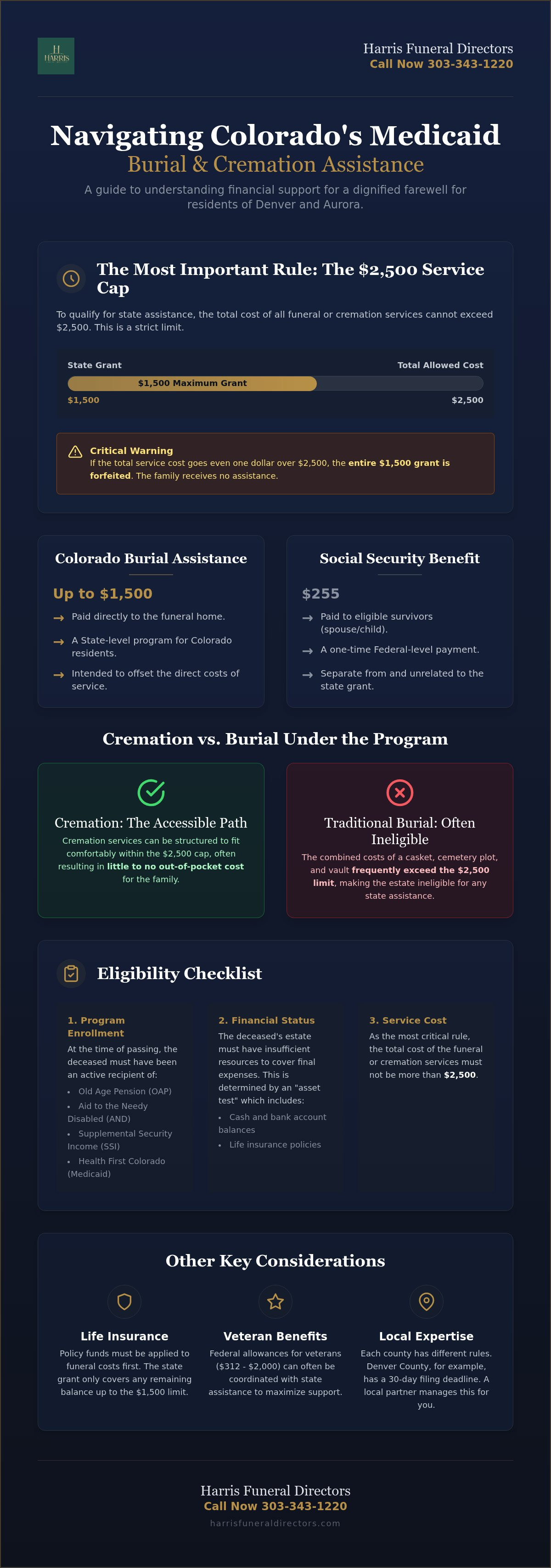
While some people confuse this state assistance with the Social Security death benefit, they are quite different. The federal government provides a one-time payment of $255 to eligible survivors. In contrast, the Colorado state program provides a grant of up to $1,500 paid directly to the funeral home. This distinction is vital. The state funds are meant to directly offset the costs of the service itself, providing a foundation for a respectful ceremony that might otherwise be out of reach.
The Difference Between Burial and Cremation Assistance
Medicaid Cremation and Burial Assistance in Colorado operates under a strict financial ceiling. To qualify for the $1,500 grant, the total cost of the funeral or cremation services cannot exceed $2,500. This cap often makes traditional burial difficult to arrange as a no-cost option, as the combined costs of a casket, cemetery plot, and vault frequently push the total price beyond the state's limit. If the total bill exceeds $2,500, the entire grant is forfeited. Because of this, cremation is often the most accessible and practical path for eligible families. It allows for a dignified service that comfortably fits within the state’s financial guidelines, often resulting in little to no out-of-pocket expense for the family. You can view our service options to see how we structure these arrangements to meet state requirements.
Why Local Expertise Matters in Colorado
Managing the rules set by the Colorado Department of Health Care Policy and Financing (HCPF) requires a steady, experienced hand. As of August 2026, the state requires specific documentation that must be submitted within a narrow window. For example, applications in Denver County must be filed within 30 days of the death, though extensions are sometimes possible for good cause. Since each county handles its screening process differently, having a local partner is essential. We understand the nuances of the Aurora and Denver systems and work directly with county offices to streamline the approval process. This local expertise ensures that you don't have to spend your time in government offices during your first weeks of grief.
Eligibility Criteria for Colorado Medicaid Funeral Benefits
Determining if your loved one qualifies for state support is a vital step in planning a respectful service. The primary requirement is that the person was an active recipient of specific public assistance programs at the time of their passing. The Colorado Burial Assistance Program helps bridge the gap for families, but it operates with strict financial boundaries. Beyond program enrollment, the state looks at the total cost of the service. If the final bill exceeds $2,500, the estate becomes ineligible for the $1,500 grant. This rule ensures that limited state funds are reserved for those who truly need help achieving a basic, dignified farewell.
Medicaid Programs That Qualify for Assistance
Eligibility is tied to specific state and federal programs. If your loved one was enrolled in any of the following, you should explore Medicaid Cremation and Burial Assistance options:
- Old Age Pension (OAP): Seniors receiving this state-funded pension often qualify for the burial grant.
- Aid to the Needy Disabled (AND): This program supports those with disabilities, and its recipients are typically eligible for final expense aid.
- Supplemental Security Income (SSI): Federal SSI recipients often meet the state’s criteria for indigent burial assistance.
- Health First Colorado (Medicaid): This includes individuals in Long-Term Care Medicaid, where final expense planning is a common part of the spend-down process.
Financial Considerations and 'Asset Testing'
Colorado law defines "indigent" status based on the resources available within the deceased's estate. When a family applies for aid, the county evaluates whether there are enough funds to cover a dignified service. Life insurance policies are a common point of confusion. If a policy exists, those funds must be applied to the funeral costs first. The state grant only covers the remaining balance up to the $1,500 limit. Understanding the rules for Medicaid Cremation and Burial Assistance ensures your family isn't caught off guard by unexpected denials based on estate assets. In the context of Colorado Medicaid funeral eligibility, countable assets refer to liquid resources such as cash, bank account balances, and life insurance proceeds that can be used to pay for final arrangements.
If your loved one was a Veteran, the process changes slightly. Federal burial allowances for veterans range from $312 to $2,000, depending on the nature of their service and death. These benefits can often be coordinated with state assistance to ensure a full and honorable service. Our team is experienced in coordinating Veteran funeral services alongside Medicaid benefits to maximize the support your family receives. We can help you determine which benefits apply and how to document them correctly for the county offices.
Comparing Medicaid-Covered Cremation vs. Traditional Burial
Choosing between burial and cremation is a deeply personal decision, but when financial constraints are a primary concern, the type of service you select significantly impacts your eligibility for state aid. The Colorado Burial Assistance Program is designed to help, yet it carries a strict $2,500 total cost cap. Because traditional burials involve cemetery plots, vaults, and caskets, the final bill often exceeds this limit. When the total cost crosses that $2,500 threshold, the state grant is no longer available. This is why many families find that cremation is the only path to a truly no-cost service.
Medicaid-No-Cost Cremation in Aurora
For families in our community, the "No-Cost Cremation" model provides a way to honor a loved one without the stress of an unexpected bill. This package typically covers the essential professional services required for a dignified farewell. This includes the transportation of your loved one, the cremation process itself, and the handling of all necessary legal documentation. By keeping the total service cost under the state's limit, we ensure the $1,500 grant covers the balance. You can learn more about how we facilitate these respectful arrangements by reading our guide on Cremation Services in Aurora.
Traditional Burial Assistance Limits
While Medicaid does offer burial assistance, it rarely covers the entire cost of a traditional service. The grant can be applied toward basic requirements like a simple casket or the professional fees for a graveside service. However, cemetery costs in the Denver metro area, such as the purchase of a plot or the required outer burial container, often push the total price beyond what the program allows. Families in the Denver metro area can find specific County Burial Assistance Information that mirrors the state's requirements. If you prefer a traditional service, it's vital to understand these limitations early in the planning process. Our overview of Traditional Burial Services in Aurora provides more detail on what to expect when planning a burial within a budget.
When exploring Medicaid Cremation and Burial Assistance, it's helpful to see how these two options fit within the state's strict financial limits. If a family chooses to add "upgrades," such as an elaborate viewing or a premium casket, they must be careful not to exceed the $2,500 total service cap. If the gap between the state grant and the final bill is managed correctly, families can still achieve a beautiful, dignified service. We work closely with you to identify which costs are essential and which might risk your eligibility for state support.
How to Apply for Assistance and Required Documentation
Paperwork is the last thing you want to think about when you are grieving. However, the timing for Medicaid Cremation and Burial Assistance is very strict in Colorado. In Denver County, applications must be filed within 30 days of the death. While extensions are sometimes possible for up to one year for good cause, starting the process immediately is the best way to ensure your benefits are secured. We recommend contacting us as soon as a death occurs so we can verify your loved one's eligibility and begin the necessary steps on your behalf.
The first step is a simple conversation with our team. We'll help you confirm if your loved one was receiving Health First Colorado or other qualifying benefits. Once eligibility is likely, we move quickly to gather the required information. You don't have to handle the county offices alone. We act as your advocate, ensuring every form is completed correctly to avoid delays or denials.
Essential Documentation Checklist
To process a claim for Medicaid Cremation and Burial Assistance, the county requires specific proof of the deceased's status and the estate's financial situation. Having these items ready will help the process move smoothly:
- Identification: The deceased's Social Security card or official Social Security number documentation.
- Proof of Status: Documentation showing they were receiving Medicaid, Old Age Pension, or Aid to the Needy Disabled at the time of death.
- Financial Statements: Proof of any income or assets remaining in the deceased's name.
- Harris Funeral Directors Statement: An itemized list of the goods and services provided, which we will prepare for you.
- Affidavit of Resources: A signed statement confirming there are no other insurance policies or family funds available to cover the costs.
The Role of the Funeral Director
We see our role as more than just service providers; we are your liaison with the state. One of the most common mistakes families make is paying for services out of pocket before checking for benefits. If you pay the full bill yourself, you may lose the chance to receive state aid. We encourage you to reach out to us for an immediate need consultation before making any payments. The state pays the funeral home directly to ensure funds are used specifically for the final arrangements and to simplify the financial burden for the grieving family.
By handling the submission of the claim to the county department, we take the logistical weight off your shoulders. Our experience with the Colorado Department of Human Services allows us to navigate the system efficiently. We'll keep you informed at every step, providing the calm and steady support you need during this time.
Dignified Final Arrangements with Harris Funeral Directors
At Harris Funeral Directors, we believe that the value of a life is not measured by the size of an estate. Every individual deserves a final rest that reflects their unique legacy and provides peace for those they leave behind. We serve families across Aurora, Denver, and Commerce City with the same level of care, whether they are choosing a traditional service or seeking Medicaid Cremation and Burial Assistance. Our commitment to our neighbors is rooted in the belief that dignity should be accessible to everyone, regardless of their financial situation.
We understand that the terms used by government agencies can sometimes feel cold or impersonal. When you work with us, you aren't just another case file. We provide a steady, empathetic presence to help you navigate the logistical hurdles while you focus on the emotional journey of saying goodbye. Our support doesn't end when the service is over; we offer continued guidance and grief resources to help your family find a path forward.
Why Families Choose Harris for Medicaid Services
Our team brings decades of experience to every arrangement we handle. We have a deep understanding of Colorado's specific welfare and Medicaid systems, which allows us to act as a reliable bridge between your family and the county offices. Because we are family-owned and operated, we take a personal interest in every family that walks through our doors. We treat your loved one with the same respect and sincerity we would show our own family members.
Choosing a partner who understands the nuances of Medicaid Cremation and Burial Assistance means you can avoid the common pitfalls that lead to benefit denials. We focus on transparency and honesty, ensuring you understand exactly what the state covers and how to stay within the necessary financial limits. You can learn more about our philosophy and our commitment to the community by visiting our Why Choose Us page.
Immediate Need and Pre-Planning
If a death has just occurred, please know that you don't have to face the next steps alone. We provide 24/7 support to ensure that your loved one is cared for immediately. The first few hours are often the most stressful, but our compassionate guides are ready to step in and handle the initial logistics for you. If you find yourself in this situation, please reach out to us through our Immediate Need page so we can begin assisting you right away.
For those who know a loved one is currently receiving Medicaid or Old Age Pension benefits, pre-planning is a wise and thoughtful choice. It allows you to gather the necessary documentation and understand your options before the time of need arrives. This proactive approach can significantly reduce the pressure on your family during an already difficult time. We can walk you through the eligibility requirements and help you structure a plan that ensures a dignified farewell at little to no cost.
Securing a Dignified and Peaceful Legacy
Honoring a loved one is a sacred responsibility, and financial limitations shouldn't diminish the sincerity of that farewell. By following the state's guidelines on service caps and documentation windows, you can access the support your family needs. The Colorado Burial Assistance Program provides a clear pathway to a respectful service for those who qualify, ensuring that every member of our community is treated with care. Whether you choose cremation or a traditional burial, staying within the $2,500 total cost limit is the key to maintaining eligibility for state support.
Harris Funeral Directors is here to serve as your steady partner. As family-owned specialists in the Denver metro area, we have the experience to manage the complexities of Medicaid Cremation and Burial Assistance on your behalf. We focus on the logistical details so you can focus on your family's emotional needs. Please reach out to us today to learn how we can help you provide a beautiful tribute at little to no cost. Contact Harris Funeral Directors for Compassionate Medicaid Assistance. You don't have to carry this weight alone, and we're honored to help you find peace of mind.
Frequently Asked Questions
Does Colorado Medicaid pay for the entire funeral?
Colorado Medicaid provides a burial assistance grant of up to $1,500, which covers a significant portion of final expenses. While it may not cover a complex traditional funeral, it often covers the full cost of a direct cremation when the service is structured correctly. To receive this aid, the total cost of all services cannot exceed $2,500. We work with families to ensure their chosen arrangements stay within these state-mandated financial limits.
How do I know if my loved one is eligible for Medicaid burial assistance?
Eligibility depends on the benefits your loved one was receiving at the time of their passing. Generally, anyone enrolled in Health First Colorado (Medicaid), the Old Age Pension, or Aid to the Needy Disabled qualifies for support. Our team can help you verify their status with the county. If they were receiving state-funded healthcare or financial aid, they likely meet the criteria for Medicaid Cremation and Burial Assistance.
Can I still have a viewing if I use Medicaid cremation assistance?
You can include a viewing or memorial, provided the total bill for all services remains under $2,500. If adding a viewing pushes the total cost above this state ceiling, the estate loses the $1,500 grant entirely. Many families choose a simple, dignified viewing before the cremation process. We can help you balance these personal wishes with the strict financial requirements to ensure you don't lose access to state funding.
Is there a deadline to apply for Medicaid funeral benefits in Colorado?
Timing is very important because the state has strict windows for filing claims. In Denver County, the application for the Burial Assistance Program must be filed within 30 days of the death. While some counties allow extensions for up to one year for good cause, it's best to act quickly. Contacting us immediately after a passing ensures we can help you meet these deadlines and secure the necessary support.
What happens if the family wants to add services not covered by Medicaid?
Families are welcome to add personalized services, but the total combined cost of the funeral or cremation cannot exceed $2,500. If the final invoice goes over this amount, the $1,500 grant is forfeited. This means you would be responsible for the entire bill out of pocket. We provide transparent guidance to help you select meaningful additions that honor your loved one while protecting your eligibility for Medicaid Cremation and Burial Assistance.
Does Medicaid cover the cost of a headstone or grave marker?
The state grant is typically applied to the professional services and goods provided by the funeral home. Because of the $2,500 total cost cap, including a headstone or permanent grave marker is often difficult within a Medicaid-funded burial. Most families use the grant to cover the essential costs of the casket and cemetery fees. We can discuss alternative ways to create a lasting memorial that fits within your family's budget.
Can Harris Funeral Directors help if the death occurred outside of Aurora?
Yes, we provide compassionate care to families throughout the entire Denver metro area and Commerce City. Even if the death occurred in a different county, we can coordinate the transportation and handle the specific paperwork required by that local office. We are familiar with the variations in application processes across the region. Our goal is to provide a steady hand and clear guidance regardless of your location in the metro area.
What is the difference between indigent burial and Medicaid assistance?
Indigent burial is a county-managed process used when a person has no known family or resources. Medicaid assistance is a specific benefit for active recipients of state programs who have families to handle their arrangements. This program allows you more control over the service and the choice of a funeral home partner. It provides a pathway to a more personal and dignified farewell than a standard county-disposition process might offer.


