

What if the most important person helping you through a loss is the one you barely notice? When you lose someone dear, the world seems to stop, yet a mountain of decisions and legal requirements suddenly appears. It’s completely natural to wonder, what does a funeral director actually do to help a family find their footing during such a storm? You might feel overwhelmed by the weight of paperwork or anxious about ensuring your loved one is treated with the highest level of respect.
We understand that this is likely one of the most difficult weeks of your life. You deserve a partner who acts as a steady advocate rather than a salesperson. In this guide, we'll pull back the curtain on the essential, often invisible role of a funeral director. You will discover how they serve as a compassionate architect for your family's final goodbye, managing everything from complex legal filings to the delicate care of your loved one. We'll provide clarity on the professional value they bring, ensuring you have the peace of mind to focus on remembrance and healing while the logistics are handled with quiet, professional dignity.
Beyond the Suit: Defining the Modern Funeral Director's Role
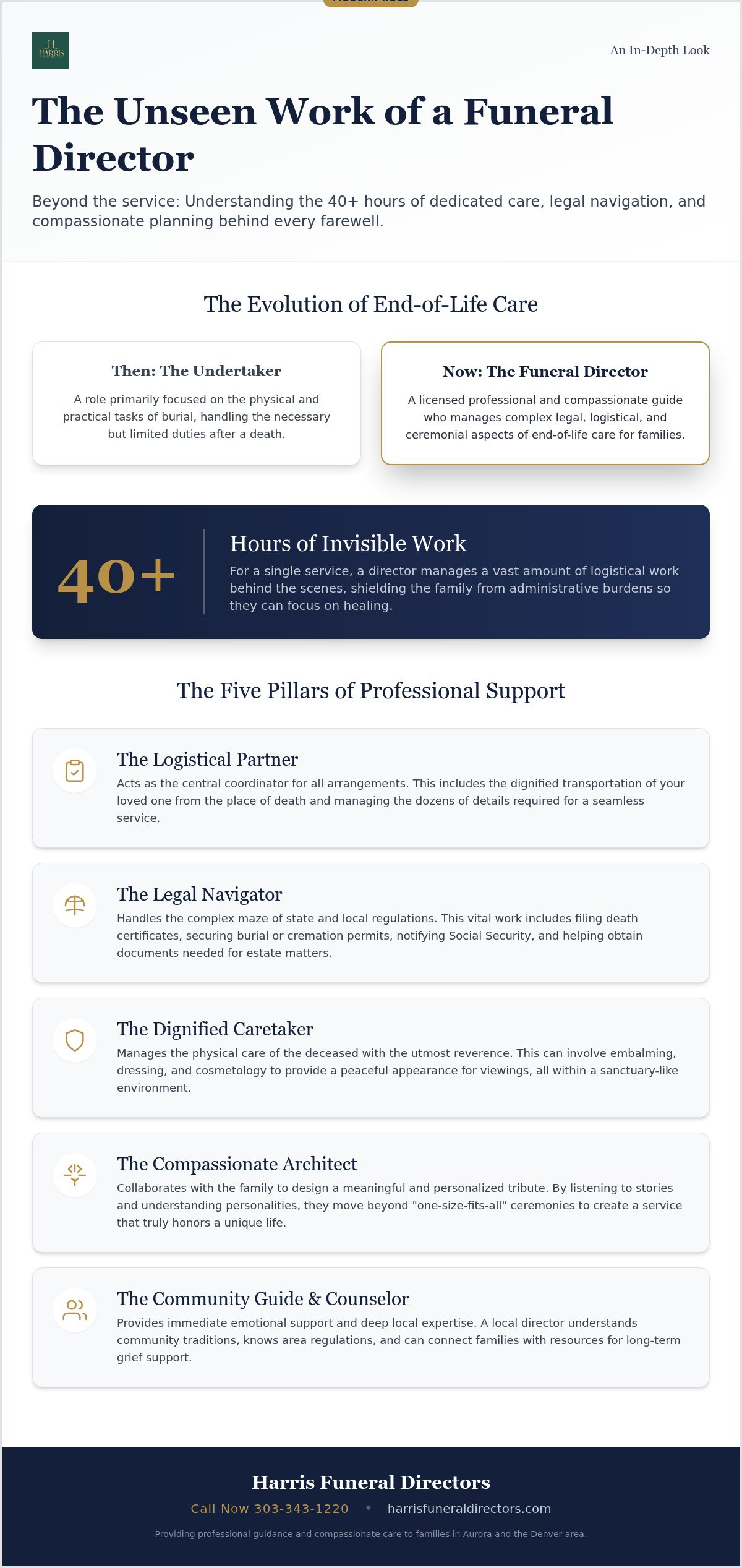
Years ago, the person who helped after a death was often called an undertaker. Their job was primarily physical and focused on the practicalities of burial. Today, that role has transformed into something much more comprehensive and supportive. A funeral director is a licensed professional who manages the complex legal, logistical, and ceremonial aspects of end-of-life care. Essentially, a funeral director is a logistical partner who protects a family's peace of mind. When people ask, what does a funeral director actually do, they're often looking for more than just a list of tasks; they're looking for a guide through the most difficult days of their lives.
This professional acts as a vital bridge. They connect the family with the medical community, such as hospitals or hospices, and the legal system. They ensure that every step follows state regulations while keeping the family’s emotional needs at the forefront. The duties of a funeral director extend far beyond the funeral service itself, starting from the moment they're called and continuing long after the burial or cremation is complete.
The Multi-Faceted Nature of the Profession
A modern funeral director wears many hats to ensure no detail is overlooked. As an event planner, they help you design a service that reflects the unique life of your loved one, moving away from "one-size-fits-all" ceremonies. As a legal consultant, they navigate the maze of Colorado state laws and health department requirements, which can be daunting for a grieving family. Finally, they serve as a counselor, providing immediate emotional support and connecting families with resources for long-term grief.
Why Families in Aurora Choose Professional Guidance
Choosing professional support is about more than just the practicalities. There's a profound difference between simply handling a body and truly honoring a legacy. Families in Aurora often look for someone who understands our specific community. A local director knows the nuances of Denver-area cemetery regulations and the diverse traditions that make our neighborhood unique. When families ask what does a funeral director actually do in a local context, the answer lies in their deep ties to the community.
By focusing on personalized care, a director ensures the experience feels human rather than clinical. They handle the burden of logistics so you can focus on saying goodbye. This level of local expertise is especially important in 2026, as Colorado implements new regulations regarding funeral home inspections and licensing. Having a trusted family advocate ensures that your loved one is cared for with the highest level of integrity and respect.
The Invisible Work: Legalities, Logistics, and Care of the Deceased
While the public often only sees the funeral service, the vast majority of a director's work happens behind the scenes. People often ask, what does a funeral director actually do in the quiet hours before a ceremony? A director typically manages over 40 hours of logistical work for a single service, ensuring every detail is handled with precision. This process begins with the transportation of your loved one. They coordinate the dignified transfer from the place of death, whether it's a private home, a hospital, or a hospice facility, ensuring the process is respectful and prompt.
When considering what does a funeral director actually do, it's helpful to view them as a shield against administrative chaos. They take on the heavy burden of legal documentation that would otherwise fall to the family. This involves filing death certificates, obtaining burial or cremation permits, and notifying Social Security. By managing these technicalities, the director allows the family to focus on their emotional needs rather than government forms and deadlines.
Navigating Colorado's Legal Requirements
In our region, state and local regulations are specific and strict. A director ensures full compliance with Aurora and Denver municipal health codes, which protects the family from legal delays or complications. They assist in obtaining the certified copies of death certificates necessary for settling estates, closing bank accounts, and processing insurance claims. For families facing financial constraints, we help manage the specific paperwork required for no-cost cremation assistance through Medicaid. This local expertise is a cornerstone of professional guidance in 2026.
The Art of Dignified Preparation
The physical care of the deceased is handled with the utmost reverence. This preparation can include embalming, dressing, and cosmetology to provide a peaceful appearance for family viewings. Whether you choose traditional burial or cremation services, the director maintains a sanctuary-like environment within the funeral home. They also coordinate directly with medical examiners or coroners if an investigation is required, acting as your professional liaison throughout the process. If you're feeling overwhelmed by these choices, our services overview can help you understand the options available for your loved one.
The Compassionate Architect: Planning and Personalizing the Service
Once the immediate legal steps are underway, the focus shifts toward the heart of the farewell. This is where the director transitions from a logistical coordinator to a compassionate architect. When you sit down for the arrangement conference, you begin to see what does a funeral director actually do to transform a difficult day into a meaningful tribute. This meeting is a collaborative session where the director listens to your stories, understands your loved one’s personality, and helps you design a ceremony that feels authentic and respectful.
One of the most vital roles during this time is that of a budget advocate. A trusted director doesn't pressure you into unnecessary expenses. Instead, they help you navigate affordable packages that honor your loved one without creating future financial strain for your family. They provide a clear, itemized explanation of costs, ensuring transparency is maintained throughout the process. This advocacy allows you to make decisions based on love and legacy rather than impulse or stress.
The director also manages a complex web of external contributors. They act as the central point of contact for:
- Vendor Management: Coordinating with local Aurora florists, musicians, and caterers to ensure every detail arrives on time.
- Clergy and Celebrants: Liaising with religious leaders or secular speakers to structure the order of service.
- Obituary Support: Drafting and placing notices in local Aurora and Denver publications to ensure the community is informed and the legacy is documented.
Honoring Veterans and Special Groups
For those who served, the requirements for a dignified goodbye are more specific. A director experienced in veteran funeral services understands how to secure military honors, coordinate flag presentations, and arrange for burial in national cemeteries. They handle the specialized paperwork required by the Department of Veterans Affairs, ensuring that Colorado families receive the benefits and recognition their loved ones earned through their service.
The Power of Pre-Planning
Many people are surprised to learn that a director’s work often begins years before a death occurs. When you choose to plan ahead, a director helps you document your wishes in detail, which removes an immense emotional burden from your surviving family members. In 2026, this is especially strategic as it allows individuals to lock in current rates, protecting their estate against future inflation. If you want to learn more about how to secure your own legacy, our funeral pre-planning guide offers a step-by-step approach to this thoughtful gift for your family.
Directing the Day: What Happens During the Ceremony
On the morning of the service, the funeral director is the first to arrive. They ensure the facility is prepared, checking that every floral arrangement is in place and that the media, such as slideshows and music, functions perfectly. When families wonder what does a funeral director actually do during these quiet morning hours, it's often the small, silent adjustments that matter most. They create a physical space that allows for quiet reflection and shared memory, removing any technical or environmental distractions before the first guest enters the room.
As guests begin to arrive, the director shifts into the role of a guest advocate. They greet attendees and offer a steady, calm presence for the grieving family. This is a period of high emotional stress; having a professional who remains composed and helpful provides a sense of safety and stability. They manage the motorcade with precision, ensuring the procession to the cemetery or graveside is safe and respectful for everyone involved. By coordinating these movements, they allow you to remain present in your grief without worrying about traffic or logistics.
The 'Traffic Controller' of Grief
A funeral service is a delicate balance of timing and emotion. The director manages the flow of the ceremony, ensuring it stays on schedule while still respecting the spontaneous emotional moments that occur. They troubleshoot technical issues or unexpected guest needs behind the scenes so the family never has to. Whether they are directing a traditional burial service from the chapel to the graveside or managing a smaller committal, their goal is seamless execution. They act as a shield, dealing with the unexpected so you can focus on saying goodbye.
Coordination with External Partners
Behind the scenes, the director works closely with cemetery staff to ensure the plot is prepared and all safety protocols are met. They liaiase with religious leaders or celebrants to maintain the sanctity of the ritual. Every physical item, from the casket to the urn, is handled with extreme care and reverence. At the graveside, the director manages the final committal service with dignity and precision. They coordinate the final words and the peaceful departure of the guests. If you are currently facing these decisions, learning more about why families trust our team can provide the reassurance you need during this difficult time.
When you consider what does a funeral director actually do on the day of the service, it's this final act of stewardship that often leaves the most lasting impression. They ensure that the final physical goodbye is as peaceful and dignified as possible, honoring the life of your loved one with the highest level of professional care.
Beyond the Service: Continued Support and Community Trust
Many families assume the professional relationship ends once the ceremony concludes. However, when you look at what does a funeral director actually do in the weeks following a loss, you find a steady commitment to aftercare. A director serves as a lifelong resource for the families they serve, offering a hand to hold as you navigate the long road of healing. This support often includes providing access to grief resources and local support groups that help you process your loss in a safe, community setting. They understand that grief doesn't have an expiration date, and their role is to remain a steady point of contact whenever you need guidance.
Beyond emotional support, there are lingering practical tasks that can feel overwhelming. The director remains available to guide you through estate matters. They explain how to use the certified death certificates they've already secured to settle bank accounts, transfer property titles, and close utility accounts. This guidance is invaluable when your mental energy is low. By providing this continued advocacy, they ensure that the logistical loose ends don't become a source of further stress for your family. They act as a bridge to the next chapter, ensuring you have the documentation and knowledge needed to move forward with confidence.
Why Family-Owned Matters in Aurora
In the Denver metro area, there is a significant difference between corporate-owned chains and local, independent directors. Choosing a family-owned Aurora funeral home ensures a level of long-term accountability that corporate entities often lack. Local directors aren't answering to distant shareholders; they're answering to their neighbors. They invest back into the Aurora and Denver communities and carry the responsibility of having their family name on the door. This personal investment means they treat every family with the same care they would want for their own relatives, prioritizing integrity over high-pressure sales tactics.
Taking the First Step
If you're currently facing a loss, know that you don't have to manage these complex decisions alone. Reaching out for immediate need assistance is the first step toward finding peace and stability. It's important to ask questions and ensure you feel completely comfortable with your chosen director. They should be a source of clarity, not pressure. When you ask what does a funeral director actually do, the ultimate answer is that they provide a foundation of trust so you can focus on what truly matters: honoring a life well-lived. If you have questions about our role or how we can support you, we are here to help.
Choosing a Steady Partner for Your Family's Journey
The role of a funeral director is a unique blend of quiet logistical precision and deep emotional advocacy. By managing complex legal filings, the physical care of your loved one, and the intricate flow of the ceremony, they create a space where your family can focus entirely on remembrance. Understanding what does a funeral director actually do helps transform a sense of overwhelming anxiety into a feeling of supported clarity. You aren't just hiring a service provider; you're gaining a trusted guide who protects your peace of mind and honors your loved one’s legacy with dignity.
As a family-owned and operated business in Aurora, we take this responsibility personally. Whether you need specialized veteran funeral services, Medicaid no-cost cremation assistance, or simply a transparent, affordable pricing package, we're here to serve you with integrity. You don't have to navigate these difficult decisions alone.
Speak with a compassionate director at Harris Funeral Directors today. We are ready to walk alongside you, providing the steady hand and local expertise your family deserves.
Frequently Asked Questions
Is a funeral director the same thing as a mortician?
While people often use these terms interchangeably, "funeral director" more accurately describes the modern professional who coordinates the entire farewell. Mortician is an older term that primarily focused on the physical care of the deceased. Today, the role has expanded to include emotional advocacy, complex event planning, and guiding families through the legal system.
Why do funeral directors charge a 'Professional Service Fee'?
This fee covers the extensive administrative and logistical work that happens behind the scenes. When families ask what does a funeral director actually do to earn this fee, it includes 24/7 availability, filing government documents, and maintaining professional facilities. It ensures a licensed expert is managing the 40 or more hours of labor required for a single service.
Can a funeral director help if we want a service outside of the funeral home?
Yes, directors frequently coordinate ceremonies at churches, parks, community centers, or private residences. They manage the transportation of the deceased, coordinate with external vendors, and handle the setup of flowers and media at your chosen location. Their presence ensures the service runs smoothly regardless of the venue you select to honor your loved one.
How does a funeral director coordinate with Medicaid in Colorado?
Directors act as professional liaisons between the family and the Colorado Department of Human Services. They help navigate the specific eligibility rules for 2026 and manage the paperwork required for Medicaid no-cost cremation assistance. This specialized support ensures that qualifying families receive the benefits they are entitled to without the burden of navigating state bureaucracy alone.
What should I look for when choosing a funeral home in Aurora?
Look for a family-owned business that prioritizes transparency and has deep roots in the Aurora and Denver communities. It is vital to find a director who offers clear, tiered pricing and avoids high-pressure sales tactics. Choose a partner who listens to your needs and demonstrates specialized expertise in areas like veteran benefits or local cemetery regulations.
Do funeral directors handle the obituary and death certificate?
Yes, managing these essential documents is a standard part of their professional care. A director will draft and place obituary notices in local publications and file the necessary legal paperwork to obtain certified death certificates. By handling these technical details, they allow the family to focus on their own emotional needs and the process of remembrance.
Can a funeral director help with veteran burial benefits?
Yes, directors with veteran expertise are trained to secure the honors your loved one earned. They coordinate with the Department of Veterans Affairs to arrange for military honors, secure the burial flag, and schedule services at national cemeteries. This ensures that every protocol is followed correctly so the veteran receives a dignified and respectful final salute.
Is a funeral director available 24/7?
Yes, a director is available at any hour of the day or night for an immediate need. When a death occurs, they coordinate the prompt and dignified transfer of your loved one into their care. This constant availability ensures that families have a steady, reliable partner to turn to the moment they need professional guidance and support.


